Blog

  • Onshore vs Offshore: Which Manufacturing Model Should Businesses Choose?

    Onshore vs Offshore: Which Manufacturing Model Should Businesses Choose?

    Onshore manufacturing refers to production within a company’s home country, helping to control quality, shorten delivery times, and ensure easier regulatory compliance. Offshore manufacturing involves moving production activities to another country to optimize costs, access labor, and expand the global supply chain. The choice depends on business objectives, costs, markets, and the company’s level of risk tolerance.

    What Is Onshore Manufacturing?

    Onshore manufacturing is a model of placing factories and production directly within the country where the business operates or its primary market, rather than moving production abroad to save on labor costs. This model helps shorten the supply chain, increase quality control, and reduce the risk of logistics disruptions.

    • Definition: Onshore manufacturing, also known as domestic manufacturing, is a domestic production strategy that keeps all or most of the manufacturing process within the country where the business is headquartered or its main consumer market. This model is the opposite of offshore manufacturing (production abroad, usually in countries with lower labor costs) and nearshore manufacturing (production in a neighboring country or the same geographical region).

    In Vietnam, onshore manufacturing is gaining increasing attention as many foreign enterprises move their factories to Vietnam and as domestic businesses proactively build local production capacity instead of relying on imports.

    • Real-world Example: A Vietnamese fashion brand that previously imported all products from China and switched to setting up a garment factory in Binh Duong is practicing onshore manufacturing. A Korean electronics company building an assembly plant in Bac Ninh instead of assembling in Korea and then exporting to Vietnam is also a typical example of this model from the perspective of the Vietnamese market.
    • How it Works: Onshore manufacturing businesses directly control the entire value chain from importing raw materials, production, and assembly, to quality control, storing finished goods, and distributing them to the market. The geographical proximity between the factory, warehousing, and the consumer market creates advantages in response speed and the ability to adjust production volume more flexibly than offshore manufacturing.
    Criteria Onshore Manufacturing Offshore Manufacturing
    Production location Domestic, near the market Overseas, usually far from the market
    Labor costs Higher Lower
    Shipping time Short, 1–5 days Long, 2–8 weeks
    Quality control Direct, easy to monitor Indirect, difficult to control
    Disruption risk Lower Higher, dependent on international logistics
    Warehousing needs Increases due to continuous production Dispersed, requires larger buffer warehouses

    When Businesses Choose Onshore Manufacturing

    Businesses often switch to onshore manufacturing when international logistics costs rise, negating the cost advantages of offshore production; when short delivery time requirements from customers cannot be met by distant production; when product quality needs stricter control; and when they want to reduce dependence on global supply chains that are easily disrupted by geopolitical events or natural disasters.

    After the COVID-19 pandemic, the trend of reshoring (bringing production back home) and nearshoring has increased sharply worldwide as many businesses realized the risk level of supply chains being too dependent on a single manufacturing country.

    tìm hiểu về onshore và offshore manufacturing

    What Is Offshore Manufacturing?

    Offshore manufacturing is a strategy of moving all or part of the production process to another country to leverage lower labor costs, tax incentives, and closer raw material sources. Vietnam is currently one of the leading offshore manufacturing destinations in Asia, attracting a large volume of orders from the US, EU, Japan, and South Korea.

    • Definition: Offshore manufacturing is a production model where a business sets up a factory or hires a manufacturer in a country different from its main consumer market, typically in countries with lower production costs. This model became popular in the 1970s–1980s when multinational corporations began separating consumption locations from production sites to optimize total chain costs.

    Unlike onshore manufacturing, which keeps production domestic, and nearshore manufacturing, which places factories in neighboring countries, offshore manufacturing usually involves greater geographical distances and more significant labor cost disparities between the two nations.

    • Real-World Examples From Major Brands: Apple, Nike, and Samsung are three of the most typical examples of global-scale offshore manufacturing, and all three have direct links to Vietnam.
    Brand Offshore model Relation to Vietnam
    Apple Designed in the US, manufactured in China via Foxconn and Pegatron, diversifying to Vietnam and India AirPods, iPads, and several components have been produced in Vietnam since 2020
    Nike Designed in the US, all sneakers manufactured in Vietnam, Indonesia, and China Vietnam produces approximately 50% of Nike’s total global footwear output
    Samsung Designed in South Korea, phones manufactured in Vietnam and India Samsung has invested over $20 billion in Vietnam; Bac Ninh and Thai Nguyen are the largest production hubs outside South Korea
    Adidas Designed in Germany, manufactured in Vietnam, China, and Indonesia Vietnam produces about 40% of Adidas’s total footwear output
    Intel Designed in the US, chip assembly and testing in HCMC The Intel Products Vietnam plant in the Saigon Hi-Tech Park is one of the world’s largest chip assembly facilities
    • Outsourcing: Outsourcing is the most common form of offshore manufacturing, where a business hires a foreign factory to produce orders without directly investing in infrastructure. The business provides designs, technical specifications, and quality standards, while the contract factory provides labor, machinery, and production processes.

    In Vietnam, export processing is a major contributor to GDP, with key sectors including textiles, footwear, electronics, and furniture. This model creates a high demand for warehousing storage for raw materials and finished goods awaiting export.

    OEM and ODM — Two Popular Offshore Manufacturing Models

    OEM and ODM are the two most common offshore production partnership models, with important differences in the manufacturer’s level of design involvement.

    Criteria OEM (Original Equipment Manufacturer) ODM (Original Design Manufacturer)
    Definition Production based entirely on designs provided by the customer Designing and manufacturing products as requested; customers only need to order and apply their brand
    Manufacturer’s Role Executes production, no involvement in design Proposes and executes both design and production
    Design Ownership Belongs to the customer Belongs to the ODM manufacturer
    Development Costs Customer bears design and R&D costs Lower for the customer as the manufacturer already has existing designs
    Example Foxconn produces iPhones based on Apple’s designs A Vietnamese home appliance manufacturer designs and produces rice cookers sold to foreign retail brands under private labels
    Suitability Large brands with strong R&D Small businesses wanting to launch products quickly without investing in design

    Offshore Manufacturing and Warehousing Demand in Vietnam

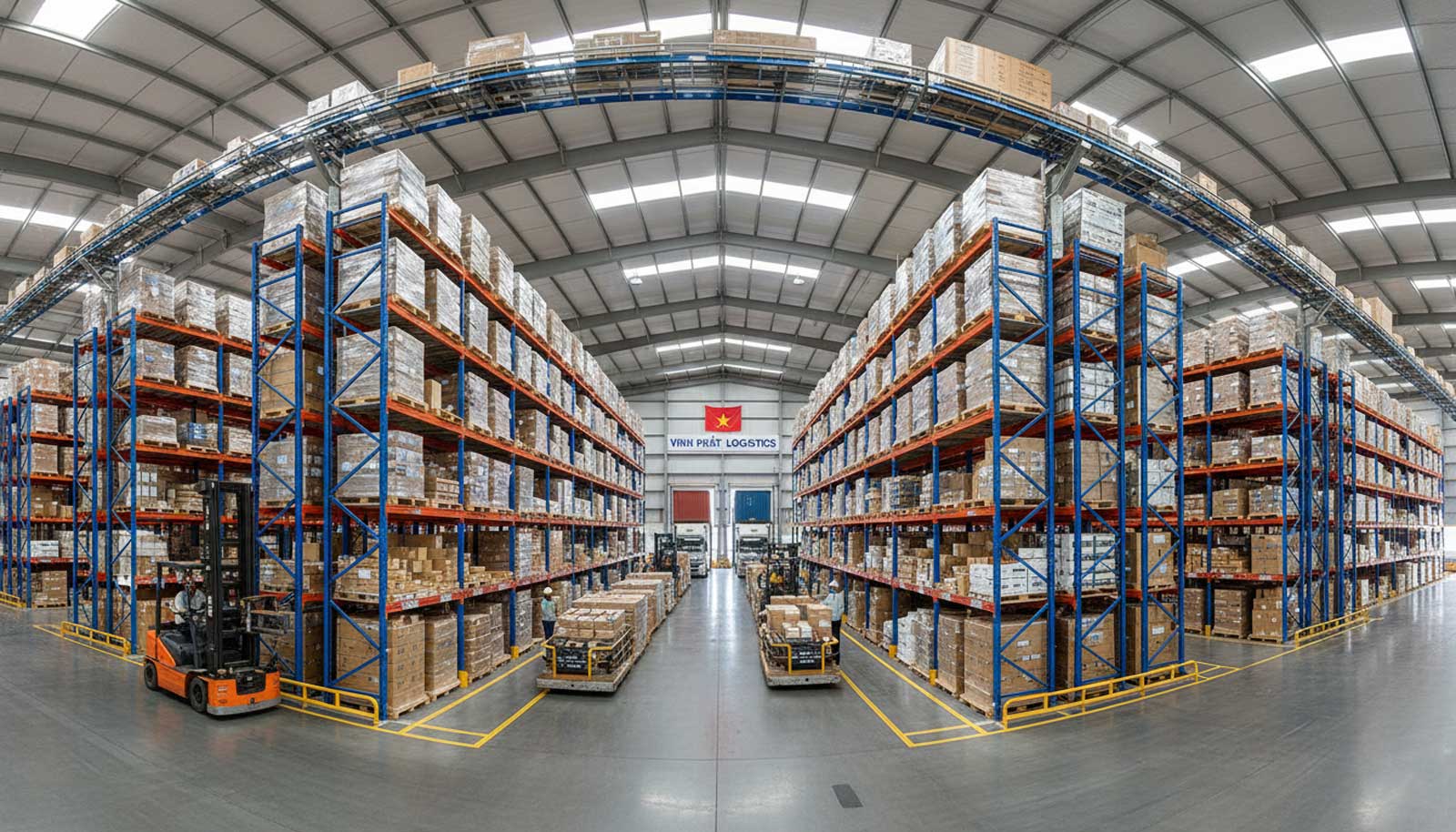
    The boom of offshore manufacturing in Vietnam creates a massive demand for warehousing across various levels. Imported raw material warehouses awaiting production, semi-finished goods storage between stages, finished goods warehouses for inspection and export packaging, and buffer warehouses to handle seasonal order fluctuations are all direct needs arising from this model. Small and medium enterprises participating in the export processing chain often require flexible order-based warehousing solutions instead of investing in high-cost fixed warehouses.

    Quick Comparison of Onshore and Offshore Manufacturing

    No single model is absolutely better for every business. Onshore is suitable when quality control and market response speed are top priorities. Offshore is suitable when optimizing production costs and accessing global markets are the primary goals. Many large enterprises combine both models within the same supply chain.

    Criteria Onshore Manufacturing Offshore Manufacturing
    Production costs Higher due to expensive labor and operations 30–70% lower depending on the country and industry
    Labor costs High, based on domestic market wages Significantly lower in developing countries
    Quality control Very high, direct on-site supervision Moderate, depends on the partner manufacturer
    Lead time Fast, usually 1–2 weeks from production to delivery Slower, usually 6–14 weeks including international shipping
    Logistics costs Low, simple domestic transport Higher, including container fees, customs, and cargo insurance
    Scalability Moderate, limited by domestic production capacity Higher, easy to increase capacity by adding partner factories
    Market access Primarily domestic and regional Global, easy to serve multiple markets from one production site
    Supply chain risk Low, less dependent on international factors Higher, easily affected by geopolitics and international logistics
    Flexibility High, faster output adjustments Lower, order changes require longer lead times
    IP protection High, follows domestic laws Riskier in some countries with weak legal systems
    Warehousing needs Centralized, warehouses near factories and markets Dispersed, requires buffer warehouses at multiple points in the chain
    Environmental impact Lower due to reduced long-distance transport Higher due to international logistics generating more carbon
    • When to Choose Onshore: Onshore manufacturing is best suited for products requiring high and uncompromising quality control such as medical and aerospace equipment, products with short lead times based on market demands like fast fashion responding to trends, businesses wanting to build a “Made in Vietnam” or “Made in USA” brand with clear marketing value, and manufacturing sectors with special Government protection or support.
    • When to Choose Offshore: Offshore manufacturing is best suited for highly standardized products with few design changes that compete primarily on price, businesses needing large-scale production where domestic costs are uncompetitive, brands wanting to access international markets from a single production base, and rapid growth stages needing flexible capacity expansion without wanting to invest in fixed factories.

    so sánh giữa onshore và offshore

    Current Trends: Hybrid Manufacturing

    Many large enterprises today do not choose a pure model but instead combine both across different stages of the production chain. Keeping research and development onshore to protect intellectual property, moving component manufacturing offshore to optimize costs, and bringing final assembly and quality control back onshore or nearshore to shorten lead times is the most common hybrid structure today.

    In Vietnam, this hybrid model is clearly evident when Samsung maintains R&D in South Korea but manufactures the majority of its phones in Vietnam, or when European fashion brands design in Paris but outsource production to garment factories in Ho Chi Minh City and Binh Duong.

    Choosing between onshore and offshore is not just a matter of cost but also a calculation of risk, speed, and long-term brand strategy. Businesses that clearly understand the strengths and weaknesses of each model will be able to design a supply chain better suited to their actual growth objectives.

    Advantages, Challenges, and Considerations When Choosing a Manufacturing Model

    Both onshore and offshore have distinct advantages and challenges that cannot be ignored. The right decision comes from understanding both sides rather than looking solely at cost or quality.

    Advantages of Onshore Manufacturing

    Advantage Practical Details
    Quality control Direct supervision at the factory; detecting and handling defects right within the process instead of after the goods have shipped thousands of kilometers
    Regulatory compliance Operating within a familiar legal system, making it easier to meet domestic safety, labor, and environmental standards
    Fast delivery Lead times shortened from 6–14 weeks to just 1–2 weeks, allowing for rapid response to market demand fluctuations
    Ease of coordination Shared time zones, language, and business culture make communication between design, production, and sales departments significantly more efficient
    Intellectual property protection Domestic legal systems protect designs, formulas, and manufacturing secrets much better than production in countries with weak IP systems

    Advantages of Offshore Manufacturing

    Advantage Practical Details
    Lower costs Labor costs in developing countries are 50–80% lower than in developed nations, creating a major competitive advantage in pricing
    Large scale Easily scale capacity by adding partner factories without investing in new infrastructure, suitable for rapid growth phases
    Abundant labor Offshore hubs like Vietnam, Bangladesh, and Indonesia have young, large, and increasingly skilled workforces for complex manufacturing sectors
    Access to new markets Locating a factory in a country helps businesses understand that market more deeply and expand distribution within the region more easily
    Supply chain diversification Distributing production across multiple countries reduces concentration risk, ensuring operations aren’t severely impacted when one country faces disruptions

    Key Challenges to Consider for Both Models

    Challenge Onshore Offshore
    Logistics Simpler, but domestic transport costs are rising rapidly Much more complex, depending on seaports, aviation, and shipping intermediaries
    Taxes and customs No import duties for the domestic market Tariffs, customs fees, and clearance procedures create significant costs and delays
    Political risk Lower, but still subject to domestic policy changes Higher, easily affected by trade relations, economic sanctions, and political instability
    ESG and sustainability Easier to control and prove to investors and customers Difficult to monitor; risk of brand damage if partner factories violate labor or environmental standards
    Exchange rate fluctuations No impact on domestic transactions Fluctuating exchange rates change actual production costs in unpredictable ways
    Cultural differences None Communication across different languages, time zones, and work styles creates daily operational friction
    Remote quality management Not necessary Requires inspection systems, periodic audits, and on-site QC personnel or independent inspection units
    Warehousing needs Centralized, easy to manage Dispersed, requiring buffer warehouses at multiple points in the chain from factory to consumer market

    Regardless of the model chosen, the need for flexible storage is always a problem that needs solving. Onshore creates a demand for warehouses near factories and markets. Offshore creates a demand for buffer warehouses at import and distribution points. Both require flexible storage solutions based on volume rather than investing in high-cost fixed warehouses when output is not yet stable.

    Vì sao nên thuê kho tại Bình Dương

    Why Vietnam is Becoming a Top Offshore Manufacturing Destination?

    Vietnam has emerged as one of Asia’s most attractive offshore manufacturing destinations thanks to a combination of several advantages: competitive costs, a rapidly growing young skilled workforce, an extensive network of free trade agreements, and robust industrial park infrastructure. The post-pandemic China+1 trend continues to drive FDI inflows into Vietnam at an unprecedented pace.

    China+1 — The Biggest Driver: China+1 is a strategy used by multinational corporations to diversify supply chains by adding at least one manufacturing country outside of China to reduce dependency risks. Vietnam is the leading China+1 destination in Southeast Asia due to its geographical proximity to China, a rapidly developing component supplier ecosystem, and competitive labor costs. Apple, Samsung, Intel, LG, and hundreds of other manufacturers implemented China+1 strategies in Vietnam between 2018–2020 and have continued to expand after 2022.

    Extensive FTA Network: Vietnam has signed and implemented over 15 free trade agreements (FTAs) with the world’s largest trading partners, creating significant tariff advantages for goods manufactured in Vietnam and exported globally.

    Agreement Partners Key Benefits
    CPTPP 11 countries including Japan, Canada, Australia Tariffs reduced to 0% for most goods
    EVFTA 27 European Union countries Access to the EU market of 450 million people
    UKVFTA United Kingdom Preferential tariffs post-Brexit
    RCEP 15 Asia-Pacific countries More favorable regional supply chains
    VKFTA South Korea Incentives for electronics and textiles

    Competitive Costs: Labor costs in Vietnam remain significantly lower than in China and Thailand, while labor productivity increases steadily every year. Regional minimum wages in major industrial parks range from 4.2–4.7 million VND per month, which is 40–60% lower than in China’s main manufacturing provinces. Industrial electricity costs, industrial land rentals, and factory operating costs are also more competitive compared to many countries in the region.

    Rapidly Developing Logistics Infrastructure: The Cai Mep deep-water seaport in Ba Ria Vung Tau allows large container ships to dock directly without transshipment through Singapore. The Long Thanh International Airport, currently under construction, will significantly increase air logistics capacity. The highway system connecting major industrial parks from North to South is receiving heavy investment, shortening domestic transport times between factories and ports.

    Widespread Industrial Parks: Vietnam has over 400 industrial parks stretching from North to South, many of which are developed by foreign investors with international infrastructure standards.

    Region Representative Industrial Parks Key Industries
    Northern Region Thang Long, VSIP Bac Ninh, Yen Phong Electronics, semiconductors, high-tech
    Central Region Chu Lai, Da Nang IT Park Automotive, information technology
    Southern Region VSIP Binh Duong, Amata Dong Nai, Tan Thuan Textiles, furniture, consumer goods

    Strong FDI Inflows: FDI into Vietnam has reached record levels consecutively in recent years, with major investors from South Korea, Japan, Singapore, Taiwan, and increasingly from the US and Europe. Samsung, LG, Foxconn, Intel, and Lego have all significantly expanded or are expanding their production capacity in Vietnam, driving the development of the component supplier ecosystem and logistics services.

    Industries Suitable for Offshore Manufacturing in Vietnam

    Not every industry is suitable for offshore manufacturing in Vietnam to the same extent. The eight industries below have clear competitive advantages when setting up production in Vietnam, and all generate significant demand for domestic warehousing, logistics, and supply chains.

    Industry Reasons for Suitability in Vietnam Representative Enterprises Warehousing Needs
    Electronics Rapidly growing skilled labor, Samsung and Intel have built a domestic component supplier ecosystem Samsung, LG, Intel, Foxconn Component warehouses, finished goods export warehouses, order buffer warehouses
    Semiconductors Government priority on investment attraction, growing technical workforce, proximity to Taiwan and South Korea supply chains Samsung SDI, Amkor Technology High-standard cleanrooms, strict temperature and humidity control
    Furniture and Wood Products Abundant wood raw materials, high craftsmanship, top exporter to the US and EU IKEA, Ashley Furniture (outsourcing) Large finished goods warehouses, buffer warehouses before peak export seasons
    Textiles and Footwear Vietnam’s largest export industry, developed accessory supplier ecosystem Nike, Adidas, Zara, H&M Raw material warehouses, seasonal fashion finished goods warehouses
    Automotive and Components Chu Lai and Dong Nai industrial parks attract many automakers, CPTPP reduces component tariffs Toyota, Thaco, TC Motor Large component warehouses, buffer warehouses for assembly lines
    Logistics and Distribution Central Southeast Asian location, deep-water ports, and upgrading infrastructure DHL, FedEx, Maersk Regional distribution centers, cross-docking warehouses
    Consumer Goods Strong growth in the 100-million domestic market, rapidly expanding middle class Unilever, P&G, Nestlé Multi-channel distribution warehouses, seasonal sales campaign warehouses
    Renewable Energy Strong policy support, high wind and solar potential, increasing equipment demand Vestas, GE Renewable, solar panel manufacturers Large equipment warehouses, project logistics warehouses for each construction site

    Vietnam is not just a low-cost outsourcing destination but is rapidly transforming into a high-tech manufacturing hub within the global supply chain. This shift creates a large and diverse demand for flexible warehousing for both large FDI enterprises and small-to-medium businesses participating in the supply chain.

    FAQ

    What is the fundamental difference between onshore and offshore manufacturing?

    Onshore manufacturing places factories in the country where the business operates or its main market is located, prioritising quality control and delivery speed. Offshore manufacturing moves production to another country to optimise labour costs and scale up capacity. Many large businesses combine both models within the same supply chain.

    Why is Vietnam attractive to offshore manufacturing businesses?

    Vietnam combines multiple advantages simultaneously: competitive labour costs, more than 15 FTAs with major markets, over 400 industrial zones stretching from north to south, a central Southeast Asian location, and the China+1 trend driving FDI away from China. Few countries in the region can offer all these factors at the same time.

    What is the China+1 strategy and how does Vietnam benefit?

    China+1 is the strategy of multinational corporations diversifying their supply chains by adding at least one manufacturing country outside China to reduce concentration risk. Vietnam is Southeast Asia’s leading China+1 destination thanks to its proximity to China, competitive costs, and rapidly developing component supplier ecosystem.

    Which industries are best suited for offshore manufacturing in Vietnam?

    Electronics and semiconductors, textiles and footwear, wood and furniture, and automotive components are the four industries with the clearest competitive advantages. Vietnam is transitioning from low-cost contract manufacturing to high-tech production with the presence of Samsung, Intel, Foxconn, and an increasing number of semiconductor manufacturers from Taiwan and South Korea.

    How do FTAs help offshore manufacturing businesses in Vietnam?

    Goods manufactured in Vietnam receive preferential or zero tariff rates when exported to markets that have signed FTAs with Vietnam, including the EU, Japan, South Korea, the UK, and 11 CPTPP countries. This tariff advantage creates a significant cost difference compared to manufacturing in countries without FTAs with those markets.

    How does offshore manufacturing create warehousing demand?

    Offshore manufacturing creates multilayer warehousing needs throughout the chain: raw material warehouses for imported inputs awaiting production, work-in-progress storage between production stages, finished goods warehouses pending inspection and export, and buffer storage to handle seasonal order fluctuations. Small and medium enterprises in the supply chain typically need flexible storage solutions per order rather than high-cost fixed warehouse investment.

    Does onshore manufacturing still have advantages in Vietnam?

    Yes, particularly for businesses serving the growing domestic market of 100 million consumers. Onshore manufacturing in Vietnam allows rapid market response, avoids import duties, enables direct quality control, and builds the Made in Vietnam brand which carries increasing value with domestic consumers.

    Can small and medium enterprises participate in offshore manufacturing chains?

    Yes, through roles as component suppliers, subcontract manufacturers, or logistics and warehousing service providers for large FDI corporations. Many Vietnamese SMEs have become tier-2 and tier-3 suppliers in the supply chains of Samsung, Toyota, and other major corporations operating in Vietnam.

    What is the biggest risk when choosing offshore manufacturing?

    Supply chain disruption from geopolitical events or natural disasters is the greatest risk, clearly demonstrated during the COVID-19 pandemic when many factories had to close suddenly. Difficult-to-control quality risks from a distance, exchange rate volatility, and intellectual property risks in some countries are other persistent risks that require clear management plans.

    How does flexible warehousing help businesses participating in offshore manufacturing chains?

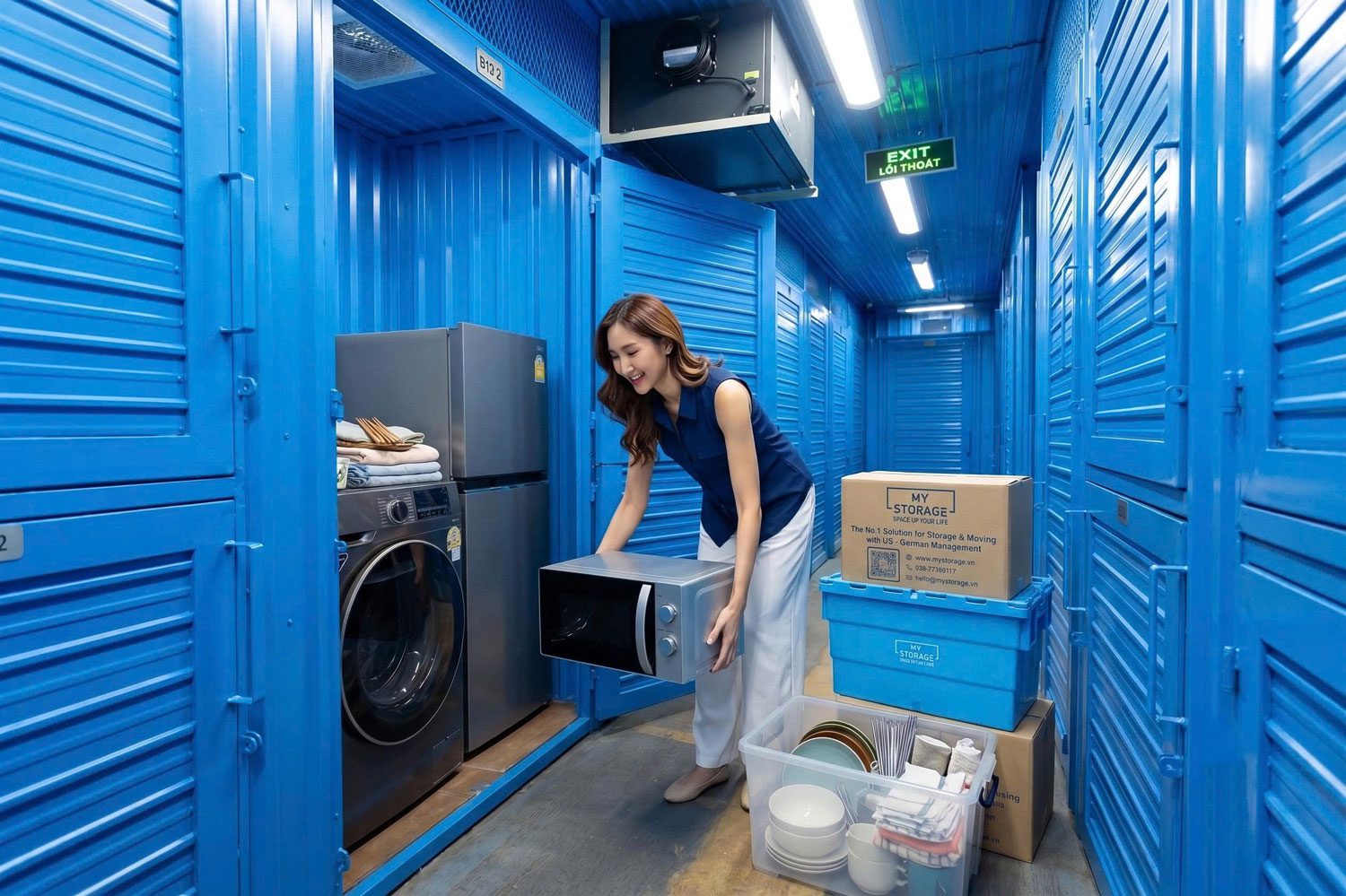
    Monthly flexible storage allows businesses to increase capacity before peak order periods and downsize after production volumes drop, without being locked into long-term warehouse contracts when orders are not yet stable. In Ho Chi Minh City, MyStorage provides units from 1–23 m² with controlled environment, 24/7 security, and month-to-month rental without long-term commitment, suitable for both manufacturers and distributors in offshore supply chains
  • How to Organize Your Home Storage Room Neatly | 10 Space Optimization Tips

    How to Organize Your Home Storage Room Neatly | 10 Space Optimization Tips

    To organize your home storage neatly, categorize items by purpose, discard unnecessary belongings, utilize vertical shelving to optimize height, and label every container. If your home storage is overloaded or filled with rarely used items, consider moving seasonal or bulky belongings to external storage to free up your living space.

    Why Is the Family Storage Room Always Cluttered?

    cluttered family storage room isn’t due to a lack of space but a lack of a system. Items accumulated over time without categorization, fixed locations, or clear disposal rules create a mess that becomes increasingly difficult to manage year after year.

    • Years of Accumulated Old Items: Family storage often operates on an unwritten rule: if you don’t know where to put it, put it in the warehouse. Over the years, the storage room becomes a collection of unprocessed old electronics, children’s clothes, abandoned sports equipment, and countless miscellaneous items without clear categories. Nothing leaves the warehouse as fast as items enter, creating constant accumulation pressure year by year.
    • Lack of Initial Categorization: The most fundamental issue for most family storage rooms is the lack of a classification system from the start. When items are stored without categories or fixed positions, every search requires rummaging through everything. Each search creates more chaos as items are taken out but not returned to their proper places after use.
    Storage Condition Time to Find an Item Success Rate
    Systematized with labels 1–3 minutes Over 90%
    Roughly categorized, no labels 5–15 minutes 60–70%
    Uncategorized, messy 15–30 minutes or not found Under 40%
    • Lack of Shelving Systems: Storage rooms without shelves force all items to be stacked horizontally on the floor, creating multiple overlapping layers that are hard to access. Items at the bottom often remain untouched for years because they are too difficult to reach without moving everything on top. Vertical shelving helps utilize the warehouse’s height, reduces stacking layers, and ensures every item has a visible position from the outside.
    • No Labeling: Unlabeled boxes are the most common reason items in storage become “psychologically invisible.” When people don’t know what’s inside a box, they often don’t open it to check and instead buy new items when needed, leading to multiple copies of the same item scattered across different boxes. Clear labeling is the least effort-intensive step but creates the biggest impact on the actual usability of the storage space.
    • Keeping Too Many “Just in Case” Items: The mindset of keeping items just in case they are needed in the future is the deepest reason why family storage is never truly cleared. Everything has a reason to be kept if viewed this way: broken items can be fixed, old items might be needed again, surplus items could be given to someone. As a result, storage space is occupied by items with no practical use, while items that are actually needed become harder to find.

    cluttered warehouse is not a space problem but a decision-making problem. Every item that hasn’t been clearly decided upon—whether to keep or discard—remains in storage and takes up space until someone actively deals with it. Building a habit of making decisions the moment you put items into storage is much more effective than periodic cleaning just for the sake of it.

    The Benefits of Scientific Storage Organization

    A scientifically organized storage room is not only neater but also saves search time, protects items from damage, and creates a significantly more efficient usable space compared to the same area in a state of clutter.

    Easy Retrieval: The most direct and obvious benefit of a well-organized storage room is finding items much faster. When each category has a fixed area and each box has a clear label, the time to find an item drops from 15–30 minutes to just 1–3 minutes. For a family that retrieves items from storage an average of 3–5 times per week, this saving is equivalent to 1–2 hours per week not spent searching and re-cleaning after rummaging.

    An efficient retrieval system also means fewer duplicate purchases. Many families buy extra items that they actually already have in storage because they didn’t know or couldn’t find them. A warehouse with labels and a clear system helps avoid this waste.

    Vì Sao Nhà Kho Gia Đình Luôn Trong Tình Trạng Bừa Bộn?

    Maximizing Space Utilization: Cluttered storage often uses less than 40% of its actual space potential because items are stacked inefficiently and many corners remain inaccessible. Vertical shelving systems that utilize height, standardized storage boxes that fit tightly together, and clear zoning help the same storage area hold 2–3 times more than arbitrary stacking.

    Arrangement Method Space Utilization Efficiency Accessibility
    Arbitrary floor stacking 30–40% Low, requires moving many items
    Shelving without zoning 50–60% Medium
    Tiered shelves with standard boxes 70–80% High
    Ceiling-high shelves, labeled boxes, and zoning 85–90% Very high with a step stool

    Reducing the Risk of Damage: Properly organized items suffer significantly less damage than those in a cluttered pile. Fragile items are placed in cushioned boxes instead of being crushed by heavy objects, leather goods are hung or positioned correctly instead of being folded and flattened, and electronic devices are placed on dry shelves instead of being exposed to damp floors. Damage caused by incorrect storage is often not discovered until needed, at which point it is too late for recovery.

    Limiting Mold and Mildew: A well-organized storage room provides ventilation space between items, allowing air to circulate and reducing localized moisture buildup. Items placed directly against floors and walls are particularly susceptible to dampness as moisture seeps in from these surfaces. Shelving that lifts items at least 10–15 cm off the floor and places them 5–10 cm away from walls creates the necessary airflow to significantly reduce mold risks.

    Categorizing and placing silica gel in boxes containing sensitive items such as clothing, books, documents, and leather goods is a simple additional step that effectively controls local humidity within each storage box.

    Enhancing Safety: Cluttered storage with unstable high stacks creates a risk of collapse and injury, which is especially dangerous for children and the elderly. Walkways blocked by belongings are a real tripping hazard, and in emergency evacuation situations, a messy storage room can pose a serious danger.

    An organized storage room with clear walkways at least 60–80 cm wide, heavy items kept low and light items high, and properly secured boxes and shelves creates a significantly safer environment for all family members.

    Investing a weekend to properly reorganize your storage room brings cumulative benefits for years: saving time searching, saving money by not rebuying items you already have, and extending the lifespan of correctly preserved belongings. This is one of the highest-return time investments in managing your living space.

    10 Tips for Optimizing Home Storage Space

    Tip 1: Categorize Items Before Organizing

    The first and most important step before buying any shelves or containers is to take everything out of storage and categorize them into three clear groups: keep and use frequently, keep but use rarely (needs storage), and discard or donate. This step typically reduces the total volume of items in storage by 30–40%, creating significant empty space before reorganization begins.

    A simple decision rule: if you haven’t used it in the last 12 months and have no specific plan to use it in the next 12 months, it is a candidate for disposal or donation rather than continuing to take up storage space.

    Tip 2: Utilize Height with Vertical Shelving

    Most home storage wastes the entire space from head height to the ceiling, which is usually 1–1.5m of potential storage height. Adjustable metal shelves 1.8–2m high are the most important investment for optimizing storage space because they increase vertical capacity without expanding the floor footprint.

    The principle for shelf stacking: heavy and rarely used items on the lowest level, frequently used items at arm’s reach from 80–160 cm, and the lightest, least-used items on the top level. This arrangement is both safe and time-saving when retrieving items.

    Tip 3: Use Standardized Boxes of the Same Size

    Storage boxes of varying sizes do not fit tightly together, creating many useless gaps between them. Choosing one or two standard box sizes and using them consistently throughout the storage room helps them fit more snugly, increasing actual capacity and creating a significantly tidier appearance.

    Transparent plastic boxes allow you to see the contents from the outside without opening them, saving search time. Fabric boxes with lids are suitable for light items like clothing and blankets. Cheap cardboard boxes are prone to dampness over time and should be avoided for valuable items.

    Tip 4: Label All Boxes and Zones

    Labeling is the least effort-intensive step but creates the biggest impact on maintaining long-term storage tidiness. Clear labels eliminate the need to open boxes for inspection, helping you find items quickly and, more importantly, helping family members return items to the correct place after use.

    The most effective labels include both the category name and a list of 3–5 main items inside. For example, instead of just writing “Electronics,” write “Electronics: old charging cables, adapters, spare headphones.” Laminated labels or clear printed labels are more durable than handwritten ones with ink that easily fades.

    Cách Bảo Quản Giày Dép Đúng Cách Không Bị Mốc, Mất Form Và Ố Vàng

    Tip 5: Create Dedicated Zones for Each Category

    Categorizing your storage into clear zones helps everyone in the family know where to find and return items without having to ask. Repair tools, sports equipment, children’s items, documents, and seasonal items are the five most common zones in a family storage room.

    Drawing a simple storage map and sticking it on the door helps all family members understand the system without having to memorize it. This step is particularly useful during the first few months when the new system has not yet become a habit.

    Tip 6: Place Frequently Used Items in the Most Accessible Locations

    Not all items in storage are used with the same frequency. Repair tools used monthly need to be in a different position than Lunar New Year decorations that are only taken out once a year. Arranging storage locations based on actual usage frequency saves time and effort every time you retrieve an item.

    Place weekly items on eye-level shelves near the entrance, monthly items in the middle section of the storage room, and items used less than once a year in the deepest or highest spots. This arrangement naturally creates a logical flow of movement within the storage space.

    Tip 7: Utilize Door and Wall Space

    The back of the storage door and the walls are often left completely empty, even though they represent significant potential storage space. Over-the-door hooks are suitable for small tools, sports gear, and bags. Floating wall shelves take advantage of the wall area above standing racks. Wall-mounted pegboards are perfect for repair tools, completely freeing up floor and shelf space.

    Tip 8: Declutter Periodically Every 6 Months

    A well-organized storage room requires periodic maintenance to prevent it from reverting to its original state. Twice a year, before summer and before the Lunar New Year, is the ideal time to review the entire storage area, handle items accumulated over the past 6 months, and update labels if the box contents have changed.

    Each review session should answer three questions: are there any new items in storage that haven’t been properly organized, are there any labels that no longer match the current contents, and are there any items eligible to be discarded or donated.

    Tip 9: Control Humidity to Protect Belongings

    Humidity is the number one enemy of stored items in Vietnam. Placing mini dehumidifiers or large quantities of silica gel desiccant bags in the storage room helps maintain humidity below 65% RH, the safe threshold for most common materials. Replace silica gel every 3–4 months or after the rainy season.

    Place all items on shelves or plastic pallets; do not let them come into direct contact with the concrete floor, as concrete absorbs moisture from the ground and transfers it to the items above. Position items at least 5 cm away from the walls to allow air to circulate between the objects and the wall.

    Tip 10: Know When You Need External Storage

    Sometimes the best solution isn’t reorganizing your existing storage, but recognizing that your home storage isn’t enough for everything you need to keep. Once you have organized your storage properly but still lack space for valuable items that must be kept, renting an external self-storage unit is the logical next step.

    Situation Solution
    Storage is cramped but items must be kept Rent an additional self-storage unit for the least-used items
    Storage is cramped because of unused items Declutter and donate before considering renting more space
    Home renovation requires temporary storage Rent short-term storage for 1–3 months during construction
    Valuable items need a better preservation environment Self-storage with humidity and temperature control

    Cách Sắp Xếp Nhà Kho Gia Đình Gọn Gàng | 10 Mẹo Tối Ưu Không Gian

    MyStorage – The Space Expansion Solution for Families

    MyStorage offers flexible self-storage units in various sizes from 1–23 m³ for families needing to store furniture, seasonal clothing, suitcases, keepsakes, and rarely used equipment. A clean, climate-controlled environment with 24/7 security ensures your belongings are preserved in optimal conditions while keeping your home clutter-free.

    Sizes Tailored to Every Family’s Needs

    Area Capacity Suitable for Reference storage cost
    1–2 m² Seasonal clothes, suitcases, books, and documents Individuals or couples needing to free up closet space 300,000–600,000 VND per month
    3–5 m² Small furniture, multi-stage baby gear, sports equipment Families of 3–4 people renovating or moving house 700,000–1,200,000 VND per month
    6–10 m² Sofa sets, dining tables, wardrobes, 15–25 boxes Families needing to store an entire room’s furniture 1,300,000–2,500,000 VND per month
    11–23 m² Full furniture for a 2BR apartment, large appliances Renting out a home, long-term overseas stays, full renovations 2,500,000–6,000,000 VND per month

    What Families Typically Store at MyStorage

    Item type Why store them? Storage conditions at MyStorage
    Seasonal clothing Only used for 2–3 months but takes up closet space year-round 50–65% RH humidity prevents mold and musty odors
    Spare furniture Extra chairs and folding tables clutter living room corners when not in use 20–26°C temperature protects wood and leather from warping
    Outgrown baby gear Accumulates quickly through stages; needs to be kept for younger siblings Clean environment with regular pest control
    Suitcases and travel gear Bulky with no fixed spot in the house 24/7 security, accessible before every trip
    Books and documents Accumulate silently, taking up wall and cabinet space Controlled humidity protects paper from yellowing and mold
    Sports equipment Bicycles, SUPs, and bulky camping gear are hard to store at home High ceilings and wide doors for large equipment
    Keepsakes and heirlooms Cannot be discarded but don’t need daily display Stable environment for long-term preservation without damage

    Storage and Security Standards

    Standard MyStorage’s compliance Practical benefits
    Humidity control Continuous 50–65% RH Prevents mold on fabric, leather, and paper
    Stable temperature 20–26°C year-round Protects wood, leather, and electronics
    Security cameras 24/7 HD, 90-day footage storage Assets are protected even when you aren’t there
    Personal PIN code Each unit has a unique code Only the owner can access the unit
    Flexible access 24/7, no appointment needed Retrieve items whenever convenient
    Flexible contracts Monthly, no long-term commitment Scale space up or down based on actual needs

    Charity Closet — When Items Are No Longer Needed

    During the process of decluttering and reorganizing storage, many families discover items they no longer need that are still in good condition. Instead of throwing them away, the MyStorage Charity Closet at 375 Vo Nguyen Giap, HCMC, accepts clean and usable clothes and household items to be passed on to those in need. Items should be washed, completely dry, and neatly packed before being dropped off; no appointment is necessary.

    An effective decluttering session often ends at MyStorage in two ways: items you want to keep but don’t use frequently go into storage, while items no longer needed go into the charity closet. The home gains space without sacrificing what the family truly needs to hold onto.

    A tidy family storage area doesn’t require more space; it requires a clearer system. Proper categorization, organizing by frequency of use, and maintaining a regular check-up habit are all it takes to keep a storage space functional rather than letting it become a dumping ground no one wants to touch.

    When belongings exceed the reasonable capacity of home storage or require a better preservation environment than a home can provide, MyStorage self-storage is the natural next step. Items to keep but rarely use are stored in the unit, while items no longer needed are placed in the charity closet at 375 Vo Nguyen Giap. The home is liberated, and important possessions are properly preserved.

    FAQ

    How do you start decluttering a storage room that is already very messy?

    Start by removing everything from the storage room and sorting into three groups — keep, donate, and discard — before returning anything. This sorting step typically reduces total volume by 30–40%, creating significant space before installing shelving and boxing items. Avoid purchasing shelves or storage boxes before knowing exactly how much remains to be stored.

    Are metal or wooden shelves better for a home storage room?

    Adjustable metal shelving is better for most home storage rooms as it supports heavier loads, resists humidity better than MDF wood, and allows easy shelf height adjustment to fit different box sizes. Solid wood is sturdy but susceptible to moisture and termites if the storage room lacks good humidity control, particularly in Vietnam during the rainy season.

    Should plastic boxes or cardboard boxes be used for home storage?

    Clear plastic boxes with locking lids are the best option as they resist moisture, allow contents to be seen from outside, and last decades. Cardboard suits light items and short-term storage but absorbs moisture and softens over time in humid environments. For valuable items needing long-term preservation like documents, special clothing, and keepsakes, investing in quality plastic boxes outweighs the initial cost saving of cardboard.

    How often should a home storage room be reviewed and reorganised?

    Twice a year is ideal, typically before summer and before Tết. Each review should check whether items have been used in the past 6 months, replace saturated silica gel, update inaccurate box labels, and process newly accumulated unsorted items. Storage rooms reviewed regularly are far easier to maintain than those requiring a major overhaul every few years.

    How can humidity be controlled in a storage room without air conditioning?

    Combine three measures: place a mini dehumidifier with 500–1000ml daily capacity for rooms under 6m², add large quantities of silica gel packets inside every storage box, and elevate all items off the floor using shelving or plastic pallets. A humidity monitor costing 100,000–200,000 VND in the room helps track and maintain below 65% RH, the safe threshold for most materials.

    How much can a 4–6m² home storage room hold when properly organised?

    A well-organised 4–6m² storage room with floor-to-ceiling shelving can hold the equivalent of 10–15m² of ordinary floor storage. A family of 4 can typically store all seasonal clothing, family suitcases, children’s items, repair tools, and holiday decorations in this space when using standardised boxes and properly tiered shelving.

    When should external storage be rented instead of reorganising the home storage room?

    When the home storage room is already properly organised but still lacks space for items with clear reasons to keep, or when items need better preservation conditions than home can provide such as controlled humidity and stable temperature. MyStorage self-storage from 300,000 VND monthly is usually more economical than discarding valuable items only to repurchase them later.

    Do old electronics stored in a home storage room need special care?

    They need storage below 60% RH to prevent circuit board oxidation, and batteries should be removed before storage to prevent corrosion damaging contacts. Place in sealed boxes with silica gel and keep on shelving away from damp floors. Valuable electronics like cameras, old laptops, and audio equipment benefit from environment-controlled storage better than typical home storage rooms provide.

    Can children help organise a home storage room?

    Children from age 6 can effectively participate in sorting their own toys and clothing, labelling boxes, and placing light items on lower shelves. Involving children in the organisation process helps them understand the system and they tend to maintain it better because they set it up themselves. Keep children’s items on lower shelves within their reach so they can retrieve and return things independently without adult assistance.

    How can MyStorage help families solve their storage space challenges?

    MyStorage provides units from 1–23 m² in Ho Chi Minh City with controlled humidity at 50–65% RH, temperature at 20–26°C, 24/7 cameras, and flexible access. Families can store furniture, seasonal clothing, children’s items, and keepsakes in better conditions than home storage allows, renting month-to-month without long-term commitment, and dropping off unneeded items at the charity wardrobe at 375 Vo Nguyen Giap.

  • Secrets to Profitable Online Selling: 10 Ways to Save Costs

    Secrets to Profitable Online Selling: 10 Ways to Save Costs

    To sell online profitably, you not only need to increase sales but also maintain good control over operating costs. Items such as inventory, premises, packaging, shipping, and order management all directly impact profit. Optimizing these costs helps the shop maintain cash flow, reduce risk, and develop sustainably even in a competitive market.

    Costs That Drain Online Shop Profits

    Many online shops have good revenue but actual profits are lower than expected because they overlook or underestimate operating costs that accumulate month by month. The eight cost groups below are the most common “loopholes” that need to be controlled.

    • Sourcing Costs: The cost of goods sold (COGS) usually accounts for 40–70% of an online shop’s revenue; it is the largest expense and also the area with the most optimization opportunities. Importing in many small batches due to lack of storage space causes the shop to lose bulk discounts, which are typically 5–15%. Lacking clear sales data leads to importing the wrong SKUs or incorrect quantities, creating slow-moving inventory and tied-up capital. Choosing unstable suppliers causes product quality to fluctuate and return rates to rise.
    • Inventory: Inventory is the largest hidden cost that many shops fail to recognize. Capital tied up in stock cannot be reinvested, storage costs accumulate every month, and long-term inventory risks becoming expired, obsolete, or damaged.
    Inventory Type Monthly Hidden Cost Cumulative Risk
    Slow-moving inventory Opportunity cost of tied-up capital Price cuts to free up capital
    Expired inventory Loss of total cost of goods Direct unrecoverable damage
    Wrong SKU inventory Storage and handling costs Must sell via clearance or giveaway
    Unsold seasonal inventory Seasonal storage costs Missed season, must wait until next year
    • Packaging Costs: Packaging is often underestimated because each unit is small, but it accumulates significantly with order volume. Carton boxes, tape, bubble wrap, wrapping paper, and labels can account for 3–8% of revenue for shops with a good packaging experience. Improper packaging increases the rate of damaged goods during transit, leading to additional return/exchange costs and affecting ratings.
    • Shipping: Shipping costs fluctuate based on delivery region, weight, and the shipping carrier, usually accounting for 5–15% of revenue. Free shipping is a tool to increase conversion, but if not calculated correctly into the selling price, it will directly eat into profits. Orders that are rejected or fail to deliver multiple times create two-way shipping costs that cannot be recovered.
    • Advertising: Advertising costs on e-commerce platforms and social networks are increasing, while conversion rates fluctuate based on season and competition. Many shops increase their ad budget when revenue drops without analyzing the root cause, leading to a continuous increase in advertising costs per order.
    Advertising Metric Ideal Level Signs for Re-evaluation
    Ad spend over revenue Under 15% Exceeding 20–25% consistently
    Cost per order Industry-dependent, under 10% of price Increasing steadily every month
    Conversion rate Over 2–3% Under 1% with a large budget
    • Returns: Each returned order creates two-way shipping costs, processing time, and the risk of damaged goods that cannot be resold at the original price. A return rate above 5% is usually a sign of product quality issues, inaccurate descriptions, or poor packaging. Controlling the return rate to under 3% often saves more than increasing the same amount of equivalent revenue.
    • Storage Premises: Storage space costs are often not clearly calculated into operating costs, especially when shops use home space. The value of occupied living space, increased utility costs, and damage from goods stored in improper conditions are all real costs, even if they do not appear clearly on the financial statement.
    • Personnel: Personnel costs are often underestimated when shop owners do everything themselves without calculating their own time. As the shop grows, manual tasks like packaging, inventory counting, and order processing take up more time but do not create growth value. This is often a sign that it is time to invest in systems and processes instead of continuing manual work.

    True profit does not come from increasing revenue but from well-controlling each cost in the operational chain. A good storage warehouse simultaneously solves many hidden costs: reducing damaged goods, allowing for bulk imports at better prices, and speeding up packaging to reduce personnel costs.

    10 Secrets to Selling Online Profitably

    Selling online profitably comes not just from high revenue but from tight control over every operational cost. The 10 secrets below focus on practical points that most online shops overlook, from inventory management to optimizing storage space and standardizing processes, helping actual profits increase without needing to increase revenue.

    1. Inventory Control

    Inventory is where capital is most tied up and least noticed. Restock based on actual demand rather than intuition by relying on sales data from the last 30–60 days to decide the quantity for each batch. Track slow-moving SKUs monthly and handle them early with slight discounts or gifts instead of holding them until you are forced to sell at clearance for very low prices. A simple rule: inventory held for more than 45 days is a sign to review your product strategy or pricing.

    2. Test Products Before Bulk Ordering

    Importing large batches before knowing if a product will sell is the leading cause of heavy inventory for shops. Run a trial with the first 50–100 units on a single channel for 2–4 weeks to measure the actual conversion rate before deciding to restock. If the conversion rate reaches the target threshold and customers provide positive feedback, then start scaling the quantity and distribution channels.

    👉 Read more: Warehousing for market testing before scaling products

    3. Don’t Let Goods Take Over Your Entire Living Space

    When a home also serves as a warehouse, both quality of life and work productivity decrease. Separating living and business areas, even with just a partition or clear rules, helps with clearer thinking and easier cleaning. A fixed packaging area with supplies within reach helps process orders 40–60% faster than having to clean up every time you pack goods on the dining table.

    Cách tiết kiệm chi phí cho nhà bán hàng online

    4. Optimizing Storage Costs Instead of Renting Large Premises

    Many online shops don’t need a dedicated warehouse yet but still require storage space. Renting mini storage with the right size is more cost-effective than renting additional premises or offices just for inventory.

    Renting self-storage monthly allows you to pay only for the exact space you need, expanding before sale seasons and downsizing when inventory drops. A 2–5 m² storage unit at MyStorage costing 400,000–1,200,000 VND per month is often much cheaper than renting commercial space for at least 3–5 million VND per month for the same area, excluding utilities and operational costs.

    5. Standardizing the Packaging Process

    Packaging without a standard process leads to errors, delays, and inconsistent customer experiences. Prepare packaging materials for each product type, keep everything in designated spots, and train anyone assisting with packing on the procedure. A standard process reduces average packing time from 8–10 minutes to 3–4 minutes per order and virtually eliminates shipping errors.

    6. Tracking Profit by Individual Product

    Total revenue doesn’t reflect which products are actually generating profit. Calculate the actual profit margin for each SKU by subtracting COGS, packaging costs, shipping fees, platform fees, and allocated advertising costs. Many shops discover that 20% of products generate 80% of actual profit, while many best-sellers barely break even or even lose money after all costs are considered.

    7. Leveraging Platform Incentive Programs

    E-commerce platforms offer many cost-support tools that not all shops fully utilize. Platform-sponsored free shipping directly reduces the shipping costs the shop has to bear. Flash sales and platform vouchers boost traffic without spending extra on advertising budgets. Keeping track of major platform promotion schedules to prepare stock and join early helps maximize benefits without increasing costs.

    8. Automating Repetitive Tasks

    A shop owner’s time is the most valuable resource and the easiest to waste on repetitive tasks that don’t drive growth. Multi-channel order management software that automatically syncs inventory and prints waybills can save 2–4 hours daily for shops with over 50 orders. The time saved should be spent on developing new products, customer service, and improving content instead of manual processing.

    9. Stocking Seasonally and Sales Planning

    Unplanned stocking leads to two simultaneous problems: long-term inventory during off-peak months and stockouts during peak months. Scheduling stock arrivals based on platform sale calendars and actual consumption cycles helps increase inventory turnover and reduces capital tied up in unnecessary stock. An inventory turnover of under 30 days is usually a sign of good inventory management for most e-commerce categories.

    10. Investing in Customer Experience

    A good customer experience generates repeat orders and positive reviews, the two most effective factors for reducing long-term advertising costs. Professional packaging with attractive aesthetics creates a great unboxing impression and increases the rate of organic social sharing.

    Fast and on-time delivery maintains high platform ratings, helping products rank better in search results without extra ad spend. Post-purchase care via thank-you messages or discounts for the next purchase is the most effective way to retain customers at the lowest cost.

    When Should Online Shops Rent Storage?

    Storage becomes necessary when your current space starts affecting operational quality or quality of life. The five signs below help identify the right time to act rather than waiting until you are completely overwhelmed.

    Sign Specific Manifestation Impact if Unresolved
    Home is out of storage space Goods overflow into bedrooms, living rooms, and hallways; family complains about living space Accumulated psychological stress, decreased quality of life, increased family conflict
    Frequent bulk stocking Importing batches of 2–5 million VND or more but lacking space, forced to import in small batches losing discounts COGS 5–15% higher than bulk imports, extra shipping costs for multiple deliveries
    Spending too much time finding products Each order takes over 5 minutes to find the right product, frequent shipping errors occur Late order rates increase, ratings drop, staff fatigue and prone to errors
    Seasonal or campaign-based inventory No space for large stock before 11.11 or Tet despite knowing they will sell Missed peak revenue, lost opportunities for better pricing from suppliers
    Preparing for business expansion Plans to add sales channels, more SKUs, or increase marketing budget but limited by space Growth blocked by logistics rather than the market
    1. Home is Out of Storage Space: This is the most obvious sign and often the point where many shop owners start seriously considering storage. When the second bedroom has become a warehouse, when cartons are stacked up to the bed, and when walkways are blocked by goods, the actual cost of not having a warehouse has long exceeded the cost of renting one—it’s just not clearly visible on the financial statement.
    2. Frequent Bulk Stocking: When a shop is large enough to import in bulk but lacks the space to receive large shipments, this is the most typical logistics bottleneck. Every time a shipment must be split because of insufficient space, you lose bulk discounts and incur extra shipping costs. Cumulatively over 12 months, the savings from bulk importing are often enough to cover the entire storage cost.
    3. Spending Too Much Time Finding Products: A threshold of 5 minutes per order is an alarm level. For a shop with 50 orders a day, 5 minutes of searching per order equals 250 minutes or over 4 hours wasted daily just looking for items. A warehouse with a clear zoning system shortens this time to under 1 minute per order, saving over 3 hours of work that could be used for growth.
    4. Seasonal or Campaign-Based Inventory: Shops with clear seasonal sales cycles or those participating in major platform sales need flexible space. This is exactly why monthly self-storage exists: rent extra space 6–8 weeks before peak season, and downsize once inventory returns to normal levels, without long-term commitments.
    5. Preparing for Business Expansion: Expanding storage space before expanding revenue is the correct order. Many shops increase their advertising budget and gain more orders but get bottlenecked at the packaging and dispatch stage because the space cannot keep up. Preparing storage before scaling marketing helps growth happen more smoothly instead of creating sudden logistical pressure.

    The best time to rent storage is not when you are already overwhelmed, but when you start noticing two of these five signs appearing consistently for at least a month. Acting early allows for better control instead of managing a space crisis in the middle of a peak sales period.

    Bí Quyết Bán Hàng Online Có Lãi - 10 Cách Tiết Kiệm Chi Phí

    Comparing Storage Solutions for Online Shops

    No single storage solution fits every business size. The right choice depends on your daily order volume, number of SKUs, and your capacity for fixed monthly costs.

    Solution Monthly Cost Pros Cons Best Fit
    Home Storage Virtually zero No additional costs, convenient initially Occupies living space, difficult to manage as SKUs increase, limited preservation New shops with under 15 orders/day, few SKUs
    Self-managed Mini Warehouse 300,000–2,000,000 VND Flexible space scaling, good security, proper storage conditions, no long-term commitment Requires self-operation, no dedicated warehouse staff Growing shops with 15–100 orders/day
    Fixed Commercial Space 3–15 million VND excluding utilities Workspace for staff, customizable to specific workflows High costs, 6–12 month long-term commitment, risky if revenue drops Shops with over 100 orders/day, needing permanent warehouse staff
    Fulfillment Service Based on volume, usually 15,000–50,000 VND per order No warehouse management needed, easy to scale, suitable for multi-channel High costs for high volumes, less control over packaging quality Shops with over 200 orders/day, wanting to focus on marketing

    Case Study: From a 60m² Apartment to a Professionally Operated Shop

    An online fashion accessories shop in HCMC started in a 60m² – 2BR apartment, operating until it reached 800 orders per month, at which point it hit a severe space bottleneck. The decision to rent a MyStorage mini warehouse transformed their entire operation and unlocked the next phase of growth.

    Status Before Renting a Warehouse

    The shop had been open for 2 years, selling on Shopee and TikTok Shop, averaging 25–30 orders per day with over 150 SKUs including bags, wallets, belts, and small accessories. All inventory was stored in the second bedroom of the 60m² apartment, with the dining table doubling as a packing station and the hallway filled with cardboard boxes.

    Issue Real Impact
    Second bedroom turned into a warehouse No more office space, orders processed on the floor
    8–12 minutes to find items per order 25 orders/day took 3–5 hours just for picking and retrieving items
    Unable to stock bulk batches before 11.11 Lost an 8% discount and ran out of stock by the third day of the sale
    Leather goods became moldy during rainy season 3–4 million VND in damages every rainy season

    Applied Solutions

    Rented a 5m² storage unit at MyStorage for 900,000 VND per month. Moved all inventory, packaging materials, and cardboard boxes to the warehouse. Only a 5–7 day supply of stock was kept at home. Shelving was arranged by product category, and a folding table was set up as a permanent packing station within the unit.

    Results After 4 Months

    Metric Before After
    Monthly orders 750–800 orders 1,100–1,200 orders
    Processing time per order 8–12 minutes 3–4 minutes
    Damaged goods due to poor storage 3–4 million VND per rainy season Virtually zero
    Shopee rating 4.6 due to late shipping 4.9 thanks to faster order processing
    Apartment space Second bedroom was a warehouse Became a formal office
    Procurement costs Multiple small restocks Reduced by 8% thanks to bulk purchasing

    The true cost of not having a warehouse isn’t zero; it’s the sum of periodic product damage, lost bulk discounts, wasted time searching for items, and occupied living space. When all these factors are accounted for, a mini warehouse isn’t an extra expense but an investment with clear returns from the very first month.

    The transition from home-based operations to a mini warehouse not only solves space issues but also compels shop owners to establish clear zoning systems and processes, creating a foundation for future scaling without logistics bottlenecks.

    Thuê Kho Bán Hàng Trực Tuyến & TMĐT Tự Quản Mini Giá Rẻ

    MyStorage – The Solution for Online Shops to Optimize Operating Costs

    MyStorage provides flexible self-storage for Shopee, TikTok Shop, and Facebook sellers, as well as small businesses in HCMC. Rent only the space you need, adjust monthly, and enjoy no long-term commitments, helping shops optimize storage costs while keeping goods in ideal conditions.

    Sizes Suited for Every Stage

    Space Best for Estimated Capacity Estimated Cost
    1–2 m² New shops, under 20 orders per day 3–6 cartons, testing products 300,000–600,000 VND per month
    3–5 m² Growing shops, 20–60 orders per day 10–18 cartons, small packing area 700,000–1,300,000 VND per month
    6–10 m² Multi-channel shops, over 60 orders per day 20–35 cartons, clear SKU shelving 1,400,000–2,500,000 VND per month
    Over 10 m² Large shops, distributors Seasonal inventory, packaging, POSM Contact MyStorage for a quote

    What MyStorage Solves for Online Shops

    Common Issues How MyStorage Helps
    Inventory taking over living space Move all stock out of your home, keeping only weekly sales items on hand
    Unable to stock large batches Flexible units allow you to scale up before sales seasons and downsize after
    Damaged goods due to poor storage 50–65% RH and 20–26°C environment protects cosmetics, leather, and sensitive items
    Slow picking, wrong deliveries Organized shelving and clear labeling reduce picking time to under 1 minute
    High rental costs Units starting from 300,000 VND per month, 80–90% cheaper than commercial space

    Operational Standards at MyStorage

    Standard Details
    Security 24/7 HD cameras, individual PIN locks for each unit, on-site security
    Environment 50–65% RH humidity, 20–26°C temperature stable year-round
    Access 24/7 via personal PIN code, no appointment needed
    Contract Monthly basis, flexible scaling, no penalties for changes
    Support Free trolleys, parking near the entrance, parcel receiving service

    Suitable for All Types of Goods

    MyStorage is ideal for storing most popular e-commerce product categories in Vietnam.

    Storage Type Why MyStorage Fits
    Cosmetics and Skincare Controlled temperature and humidity prevent discoloration and separation
    Fashion and Handbags Dry environment prevents mold on fabric and leather; SKU-based shelving
    Phone Accessories Organized by model and color, reducing SKU picking errors
    Small Appliances Sturdy heavy-duty shelving, wide entrances for trolleys
    Packaged Food Dry environment with regular pest control
    POSM and Packaging Stored upright to prevent warping, preserved for future campaigns

    MyStorage mini-warehouses are more than just storage space; they are an operational platform that helps online shops separate living and business spaces, maintain goods in optimal conditions, and build professional fulfillment processes right from the growth stage.

    FAQ

    When should an online shop start renting a mini storage unit?

    When stock starts taking over living space, finding products per order takes more than 5 minutes, or importing bulk lots before sales is impossible due to lack of space. These three signals appearing together are the clearest sign that home-based storage has reached its limit and a new solution is needed.

    Is renting a mini storage unit more expensive than storing stock at home?

    Mini storage costs of 300,000–600,000 VND monthly are lower than the combined hidden losses from damaged goods, lost bulk discounts from small-batch importing, and wasted time searching for products daily. When all these costs are properly accounted for, home storage usually costs more than mini storage from the second month onwards.

    Can mini storage units be used for on-site order packing?

    Yes, for units 4 m² or larger that can accommodate a folding table and packing materials. Many sellers choose to pack orders directly at the storage unit to save time transporting stock home, particularly effective during sale seasons when 100–300 orders need processing within short timeframes.

    What unit size suits a shop processing 30–50 orders daily?

    A 3–5 m² unit typically suits shops processing 30–50 orders daily with 100–300 SKUs. Tiered shelving maximises vertical storage capacity. Starting slightly smaller than maximum need and expanding after 1–2 months once actual storage volume becomes clear is a practical approach.

    Is MyStorage suitable for storing cosmetics and sensitive goods?

    Yes, as MyStorage maintains 20–26°C and 50–65% RH continuously. These conditions prevent serums from discolouring, creams from separating, and leather goods from moulding — problems common when storing at home without continuous air conditioning during Ho Chi Minh City’s hot and rainy seasons.

    Can storage space be increased or decreased each month?

    Yes. MyStorage offers month-to-month rental with size adjustments permitted at any time without penalty fees. Sellers typically expand by 2–4 m² before 9.9, 11.11, 12.12, and Tết campaigns then downsize once inventory returns to normal levels.

    How is self-storage different from fulfillment services?

    Self-storage gives sellers full control over inventory, packing process, and output quality at a low fixed cost. Fulfillment is more suitable when orders exceed 200 daily and full outsourcing of warehousing is desired, but variable costs per order are typically higher than self-storage for large order volumes.

    Does renting a mini storage unit help import larger lots at better prices?

    Yes. With adequate storage space, sellers can import one large lot instead of multiple small batches, typically saving 5–15% on cost of goods and reducing supplier shipping costs. For a shop with 50 million VND monthly revenue, saving 8% on cost of goods equals 4 million VND monthly, more than covering storage costs with profit remaining.

    Is stock stored at MyStorage safe?

    Yes, protected by multiple security layers: HD cameras operating 24/7 with footage stored for 90 days, individual PIN code locks per unit, and permanent security staff. Only the unit owner can access their space and MyStorage staff cannot open customer units.

    What preparation is needed before renting storage at MyStorage?

    Estimate total stock volume to select the right unit size, prepare tiered shelving and category labels to establish a zoning system from day one. Contact MyStorage for size consultation and storage can begin on the same day the agreement is signed without complicated procedures.

  • How to Properly Care for Luxury Handbags to Keep Them Looking New

    How to Properly Care for Luxury Handbags to Keep Them Looking New

    To properly store luxury handbags, you should clean the bag before putting it away, stuff it with paper to maintain its shape, use a dust bag, place it in a dry spot, avoid direct sunlight, and check it periodically. You should not hang the bag by its straps, store it in airtight plastic bags, or leave it in high-humidity environments as this can cause mold, loss of shape, and a decrease in value.

    Why Do Luxury Handbags Need Proper Storage?

    A luxury handbag is a real financial asset, not just a fashion accessory. Calfskin, lambskin, coated canvas, and gold-plated metal hardware are all sensitive to the storage environment. Proper preservation not only maintains the original beauty but also secures a resale value that can reach 70–95% of the original price for certain high-end lines.

    • Leather Materials Are Sensitive To Temperature And Humidity: Hermès calfskin, Chanel lambskin, and caviar leather are all organic materials that react directly to surrounding environmental conditions. Humidity above 70% RH for extended periods creates conditions for mold to grow on the leather surface within 4–8 weeks. Continuous temperatures above 30°C evaporate the natural oils in the leather, leading to dryness, loss of elasticity, and cracking at stress points like corners and flap folds. With soft lambskin used in the Chanel Classic Flap, surface changes due to the wrong environment can occur much faster than with harder leathers like Hermès’ togo or epsom.
    • Metal Hardware Is Prone To Oxidation: Metal accessories are a key valuation factor for luxury bags. Chanel’s gold-plated turn-lock, Hermès’ silver cadenas lock, and Dior’s gold-plated chains are all affected by high humidity and exposure to airborne chemicals.
    Metal Type Signs of Oxidation Safe Humidity Threshold
    24k Gold-plated Tarnishing, dark brown spots appear Below 60% RH
    Silver-plated Quick black tarnishing, difficult to repolish Below 55% RH
    Plated copper and alloys Verdigris (green rust), rusting in small crevices Below 65% RH
    Palladium Gradually dulls, loses metallic luster Below 60% RH
    • Resale Value Directly Depends On Condition: The secondhand luxury handbag market in Vietnam and globally is growing strongly, with valuations clearly differentiated based on the actual condition of each bag.
    Condition Value vs. New Price Real-world Example
    Mint condition, full accessories and receipt 85–120% of new price Hermès Birkin, Chanel Classic Flap often exceed original price
    Excellent, very light signs of use 65–85% of new price Still holds good investment value
    Good, light wear at high-use points 45–65% of new price Significant decrease, harder to sell quickly
    Moldy or metal oxidation Below 30% of new price Serious financial loss
    • Reducing Repair And Restoration Costs: The cost of restoring luxury bags at professional facilities is not cheap, and it is not always possible to fully return them to their original condition.
    Restoration Service Estimated Cost Result
    Surface mold treatment (light) 500,000–2,000,000 VND Good if detected early
    Metal hardware repolishing 300,000–1,000,000 VND Good for light oxidation
    Cracked or peeling leather restoration 2,000,000–8,000,000 VND Cannot be completely like new
    Color redyeing for fading 3,000,000–10,000,000 VND Color is never as even as the original
    Inner lining replacement 2,000,000–6,000,000 VND Affects value if not the original material

    Proper storage is not a luxury but a protection of your investment. A Chanel Classic Flap bought for 120 million VND and well-preserved can be resold for 100–150 million VND after 5 years. The same bag, if moldy or with oxidized hardware, might only be worth 30–40 million VND. The cost of proper storage over 5 years is usually no more than 6–10 million VND.

    Vì Sao Túi Xách Hàng Hiệu Cần Được Bảo Quản Đúng Cách?

    Factors That Cause Handbags to Deteriorate Quickly

    Most damage to designer handbags does not stem from daily use but rather from an unsuitable storage environment during periods of non-use. The five factors below act simultaneously and accumulate over time, causing damage that cannot be fully reversed.

    High Humidity Causes Mold and Mildew

    High humidity is the number one cause of handbag damage in Vietnam, especially during the rainy season lasting from May to November. When humidity exceeds 65–70% RH for an extended period, mold spores present in the air begin to germinate and grow on the leather surface within 4–8 weeks.

    Mold Stage Manifestation Recovery Potential
    Stage 1 — Surface Mold Faint white spots, can be wiped away Good recovery if treated immediately
    Stage 2 — Deep-seated Mold Gray-green spots, distinct damp smell Partial recovery, leaves marks
    Stage 3 — Structural Mold Mold eats into the inner leather layer, leather becomes mushy Cannot be fully restored

    Natural leathers such as calfskin, lambskin, and caviar leather have a porous structure that absorbs moisture faster than synthetic leather. The fabric lining inside the bag is also prone to mold and creates an unpleasant odor that spreads throughout the entire bag if not controlled early.

    Direct Sunlight Causes Fading

    UV rays in sunlight attack the chemical bonds in leather dyes through three simultaneous mechanisms: breaking down the dye molecular structure causing uneven fading, weakening the protective surface coating, and accumulating heat that evaporates natural oils within the leather.

    Fading caused by UV is permanent damage and cannot be reversed even with professional leather dye treatments, as re-dyeing never achieves the same uniformity as the original factory finish. Dark colors like black, navy, and bordeaux show less visible fading but still suffer from weakened underlying structures over time due to UV exposure.

    High Temperatures Cause Leather to Dry and Crack

    Natural leather contains oils and natural moisture that maintain its elasticity. When the ambient temperature continuously exceeds 30°C, evaporation occurs faster than the rate at which the leather can reabsorb moisture from the air, leading to a gradual loss of elasticity and causing the leather to become stiff and brittle.

    Storage Temperature Impact on Natural Leather Timeframe for Issues to Arise
    15–22°C Ideal, leather retains its properties No issues
    22–28°C Acceptable, monitor periodically Several years
    28–35°C Natural oils begin to be lost 6–18 months
    Above 35°C Rapid damage, leather becomes brittle and cracks 1–6 months

    Cars parked outdoors during the day in Ho Chi Minh City can reach 50–60°C inside; this is the most destructive environment for leather bags that can occur in daily life. Never leave designer leather bags in a car under the sun, even for just a few hours.

    Dust Accumulation

    Dust accumulating on the surface of a handbag is not only unsightly but also causes long-term damage through two main mechanisms.

    Chemical mechanism: Urban dust contains acid particles from exhaust fumes and air pollution. When combined with humidity, these particles form a weak acidic solution on the leather surface, slowly decomposing the protective coating and corroding the leather underneath over time.

    Physical mechanism: Dust clings tightly to stitching, joints, and bag corners, forming a hard residue. Cleaning this residue without proper tools can easily scratch the leather surface. With suede and nubuck, dust penetrates deep into the nap structure and is almost impossible to remove completely once it has accumulated for a long time.

    Poor Air Circulation

    Stagnant air in closed cabinets or sealed boxes creates an unfavorable microclimate for leather bags in two simultaneous ways.

    Without air circulation, moisture escaping from the leather has nowhere to go and accumulates inside the box, pushing local humidity much higher than the general room humidity. At the same time, gases evaporated from the natural aging process of leather, such as aldehydes and organic acids, accumulate in the confined space, creating an acidic environment that accelerates decomposition.

    Circulation Solutions Implementation Effectiveness
    Fabric dustbags instead of plastic bags Use breathable cotton or flannel High, allows for air exchange
    Boxes with small ventilation holes Punch 2–4 small holes in the bottom and lid Medium, significant improvement
    Storage with ventilation systems Active air circulation Highest, ideal for large collections
    Periodic box opening 15–30 minutes every 4–6 weeks Medium, simple and free

    Quy Trình Bảo Quản Túi Xách Hàng Hiệu Đúng Cách

    Proper Maintenance Procedures for Designer Handbags

    The six steps below apply to most high-end handbags from Hermès and Chanel to Louis Vuitton and Dior. Following the correct sequence and doing so regularly helps the bag maintain its original condition for years, preserving both its utility and commercial value.

    Step 1 — Clean the Bag Before Storing

    This is the most important and most frequently overlooked step. Dirt, oils from hands, and stains accumulated on the surface during storage can corrode the leather and create an environment for mold to grow.

    Component Cleaning Method Suitable Tools
    Natural leather surface Wipe gently with a dry microfiber cloth, then use a mild leather cleaner if there are stains Microfiber cloth, specialized leather cleaner
    Suede and nubuck leather Only use a dry suede brush; do not use water or wet cleaners Specialized suede brush
    Coated canvas (LV or Gucci) Wipe with a slightly damp cloth, avoiding water seepage into the stitching Damp cotton cloth, wrung dry
    Metal hardware Wipe with a soft, dry flannel cloth, buffing gently in one direction Flannel cloth, do not use polishing chemicals
    Interior lining Gently turn inside out if possible, wipe away dust and debris Soft cloth, do not use detergents

    Do not use alcohol, regular detergents, or chemical wet wipes on natural leather as they can permanently dry out and discolor the leather.

    Step 2 — Stuff with Paper or Pillows to Maintain Shape

    Leather has a shape memory and will develop permanent creases if the bag is left empty for a long time. Proper stuffing is a small investment that has a major impact on maintaining the bag’s original form.

    Suitable stuffing materials: Acid-free tissue paper is the best choice because it does not cause chemical reactions with the leather. Softly inflated air bubbles are also effective for bags that need to maintain a rigid shape. Do not use newspapers with ink as the ink can transfer to the interior lining; do not overstuff, as this can strain the stitching and stretch the leather at the joints.

    For structured bags like the Hermès Kelly or Celine Box, stuff just enough for the bag to hold its natural shape. For soft bags like the Chanel WOC or bucket bags, stuff a bit more fully to prevent the bag from collapsing completely and creating deep creases.

    Step 3 — Place the Bag in a Dust Bag

    A dust bag is the first layer of protection against dust, light, and scratches, while also allowing the leather to breathe, unlike sealed plastic bags.

    Choosing the right dust bag: Original flannel or soft cotton dust bags from the manufacturer are best as they are specifically designed for the bag’s size and material. If the original dust bag is lost, use a white or light yellow cotton bag; avoid dark colors as the dye may bleed onto light-colored bags. Absolutely do not use plastic bags, zip-lock bags, or plastic wrap as they trap moisture completely.

    Step 4 — Position the Bag Correctly

    The position of the bag during storage directly affects shape retention and prevents unwanted deformation.

    Bag Type Correct Storage Position Positions to Avoid
    Structured bags Place upright on the base, do not tilt Lay flat or stack on top of each other
    Soft tote bags Place upright with internal stuffing for support Allow to collapse completely or hang by the straps
    Clutches and handheld wallets Lay flat in their own boxes Stack multiple clutches on top of each other
    Crossbody bags Place upright, gently coil the strap on top Hang by the long strap, which stretches the attachment points
    Chain strap bags Place the chain on top of the bag; do not let it press against the leather Let the chain rest on the leather surface, creating indentations

    Step 5 — Store in a Cool, Dry Place

    The storage location and environmental conditions determine 50% of the preservation quality, even if all the above steps are followed correctly.

    • Ideal environmental standards: A stable temperature of 18–24°C without sudden fluctuations, a continuously maintained humidity of 50–60% RH, no direct sunlight or UV light exposure, and a space with gentle air circulation. MyStorage self-storage meets all these criteria with active air conditioning and dehumidification systems, significantly better than a typical home wardrobe.
    • Locations to absolutely avoid: Balconies or places with direct sunlight, areas near bathrooms with high humidity, closets against outer walls susceptible to temperature changes, and under the bed where air circulation is poor and moisture accumulates easily.

    Step 6 — Periodic Inspection

    Periodic inspections help detect problems early before damage becomes irreversible. Light mold in the early stages can be treated in 30 minutes, whereas mold discovered after 3–6 months may require restoration costs ranging from several million to tens of millions of VND.

    Recommended inspection schedule:

    Frequency Tasks to Perform
    Every 4–6 weeks Open the dust bag to observe the surface, smell for unusual odors, and check the metal hardware
    Every 3 months Replace with new silica gel, gently wipe the surface with a dry cloth, and check/readjust the internal stuffing
    Every 6 months Apply leather conditioner to natural leather, lightly polish metal hardware, and take photos to document the condition

    Cách Bảo Quản Túi Da Theo Từng Chất Liệu

    How to Care for Leather Bags Based on Material

    Each handbag material has different physical and chemical properties, leading to distinct weaknesses and specific storage requirements. Applying the correct method for each material type helps avoid the most common damages and significantly extends its lifespan.

    Calfskin Bags

    • Material characteristics: Calfskin is the most common material in designer bags, used in lines such as Hermès Togo, Hermès Epsom, and many Dior bag collections. Calfskin has higher durability than lambskin, a firmer surface, and is less prone to scratches, yet it still requires proper care to maintain its softness and color over time.
    • Common risks: Calfskin is thicker, so it absorbs moisture more slowly, but once mold sets in, it eats deeper and is harder to treat than thinner leathers. Epsom surfaces have embossed grains that easily accumulate dust in the grooves. Togo leather is softer and prone to losing its shape if not properly stuffed for long-term storage.
    • Suitable preservation methods: Condition the leather with a silicone-free leather conditioner every 4–6 months. Clean dust in Epsom grooves with a soft brush instead of a flat cloth. Stuff with just enough acid-free tissue paper to maintain the shape, place upright in a fabric dust bag, and store at 50–60% RH.

    Lambskin Bags

    • Material characteristics: Lambskin is the softest and smoothest of all leathers used for designer bags, most characteristic of the Chanel Classic Flap and Boy Bag lines. The velvet-smooth surface creates a particularly luxurious look, but it is also the material that requires the strictest preservation.
    • Common risks: Lambskin is extremely prone to scratches, even from fingernails or contact with hard materials. The smooth surface lacks a thick protective coating, so moisture penetrates faster, posing a higher risk of mold than calfskin under the same conditions. Colors may fade unevenly over time if exposed to light.
    • Suitable preservation methods: Do not let any object come into direct contact with the lambskin surface, including other leather bags. Each lambskin bag needs its own dust bag without touching others. Moisturize more frequently than calfskin, every 3–4 months. Storage humidity should be maintained at 50–55% RH, slightly lower than calfskin.

    Coated Canvas

    Material characteristics: PVC-coated canvas or polymer coating is characteristic of Louis Vuitton Monogram, Gucci GG Supreme, and Goyard. This material is more durable than natural leather against water and normal humidity but has its own weaknesses related to temperature and chemicals.

    Common risks

    Risk Cause Manifestation
    Coating peeling Prolonged high temperatures above 35°C Coating peels in small patches at corners and edges
    Surface cracking Repeated bending in cold weather Cracks along the fold lines
    Yellowing of fabric Exposure to chemicals and UV light Base fabric discolors unevenly
    Stitching mold Moisture accumulation at seams Mold spots along the stitching

    Suitable preservation methods: Absolutely avoid high temperatures and direct sunlight. Wipe the canvas surface with a slightly damp cloth; do not use leather conditioner on the canvas parts. Pay attention to cleaning and conditioning the leather trim, handles, and decorations, as these are the most vulnerable parts of a canvas bag.

    Suede Bags

    • Material characteristics: Suede is created from the inner side of the leather, featuring a characteristic fine nap surface. It is used in many Prada, YSL, and Gucci bag lines. The unique beauty of suede comes with the most demanding preservation requirements of all materials.
    • Common risks: The napped surface of suede attracts dust and dirt extremely quickly and is difficult to clean completely once soiled. Water leaves hard-to-treat stains. Suede colors fade very noticeably and unevenly when exposed to light. The nap can become compressed and flattened under pressure or friction, creating uneven surface areas.
    • Suitable preservation methods: Spray a waterproof protector for suede before use and before storage. Store in a dust bag larger than the bag so the nap is not compressed. Do not let any object press against the suede bag. Use a dry suede brush to gently brush in one direction to lift the nap before and after storage.

    PU Leather (Synthetic Leather)

    Material characteristics: PU synthetic leather is used in many mid-range bags and some lines from sustainable brands. The surface is more uniform and easier to clean than genuine leather, but its lifespan is significantly shorter and it does not appreciate in value over time like natural leather.

    Common risks: Peeling of the PU coating is the most characteristic damage and cannot be fully repaired. High temperatures above 30°C are the main cause of accelerated PU layer degradation.

    Condition Estimated PU leather lifespan
    Ideal environment 20–26°C, 50–65% RH 5–8 years
    Normal temperature 28–32°C, uncontrolled 2–4 years
    Frequent high temperatures above 35°C 1–2 years

    Suitable preservation methods: Temperature control is the number one priority for PU leather. Avoid leaving it in cars, on balconies, or anywhere temperatures may exceed 30°C. Do not use leather conditioner as it cannot penetrate the PU layer. Wipe clean with a slightly damp cloth before storing and place in a breathable dust bag.

    How Should Owners of Multiple Handbags Store Them?

    When a handbag collection exceeds the capacity of a regular wardrobe or the total value surpasses what a home environment can safely preserve, it is time to move to a more systematic storage solution. Each group of owners has different needs and solutions.

    Handbag Collectors

    Collectors often have collections ranging from 20–100 items or more, with each item valued from several million to several hundred million VND. The challenge is not just space, but protecting a real investment asset.

    Collection scale Storage solution Priority
    10–20 items Dedicated glass cabinet at home with a dehumidifier Humidity control inside the cabinet
    20–50 items Private room or 2–4 m² self-storage unit Stable environment, tiered shelving
    Over 50 items 5–10 m² climate-controlled self-storage 24/7 security, standard preservation conditions

    Principles for organizing a large collection: categorize by brand, then by product line, and finally by color. Each bag has a fixed position on the shelf, with a label containing basic information and status photos recorded every 6 months.

    Fashion Enthusiasts

    Fashion lovers often have diverse bags from various brands and segments, changing frequently according to seasons and trends. The main need is easy access and adequate preservation for those not in regular use.

    The most effective storage system for this group is dividing bags into two groups: the group currently in use for the season kept in an accessible closet, and the seasonal or rarely used group sent to a 1–2 m² small storage locker. Rotating the two groups seasonally ensures all bags are properly preserved while the home closet remains tidy.

    Luxury Resellers

    Resellers have the highest preservation requirements because the goods carry direct commercial value. An Hermès Birkin with mold or oxidized hardware can lose 40–70% of its resale value, with losses potentially reaching tens of millions of VND from a single storage incident.

    Criteria Requirements for resellers
    Environment 50–60% RH, 18–24°C continuously stable
    Security 24/7 camera, private PIN lock, no shared space
    Categorization By brand, product line, item condition
    Records Photos and condition notes for each item upon entry and exit
    Inspection Every 4 weeks, early detection of any surface changes

    3–6 m² climate-controlled self-storage unit at MyStorage, with 24/7 cameras and a private PIN lock, is the most suitable solution for luxury resellers in HCMC.

    Fashion Boutiques

    Boutiques need to store both seasonal display items and inventory waiting for sale. Store space is often insufficient to both display beautifully and store inventory according to standards.

    An effective solution is to completely separate the display space and the storage space. Rent a 5–15 m² self-storage unit near the store as the main warehouse, only bringing items out for display when needed and returning them to storage after each season. Inventory kept under proper conditions helps boutiques maintain product quality and a consistent brand image.

    Handbag Shops

    Online handbag shops or small-scale physical stores need to balance good preservation with quick access for order processing.

    Need Self-storage solution
    Clear SKU categorization Tiered shelving by brand, material, color
    Proper preservation conditions 50–65% RH storage to prevent mold and metal oxidation
    Order packaging 5–8 m² storage unit with a dedicated packaging area
    Large batch imports before sales Monthly space expansion before 11.11, Lunar New Year
    High-value security 24/7 camera, PIN lock, access logs

    Home Storage System for Collections Under 20 Items

    For collections still within the capacity of home storage, investing in the right equipment makes a big difference in preservation quality.

    Equipment Function Investment cost
    Mini dehumidifier for cabinets Maintain 50–60% RH in closed cabinets 500,000–2,000,000 VND
    Temperature and humidity meter Monitor environmental conditions 100,000–300,000 VND
    Glass-door display shelf Display and protect from dust 2,000,000–8,000,000 VND
    Bulk silica gel Control moisture in each box 200,000–500,000 VND every 6 months
    Heat-free UV lights Lighting without causing fading 300,000–1,000,000 VND

    Designer handbags are not just fashion accessories but also assets with real financial value. Proper preservation does not require high costs but primarily requires a correct understanding of each material’s needs and the discipline to perform it regularly.

    Whether you are an individual collector, a reseller, or a fashion shop owner, the core principle remains the same: a suitable storage environment preserves value better than any expensive leather care product. When a collection exceeds capacity or value surpasses what a regular wardrobe can safely protect, MyStorage self-storage with climate control, stable temperature, and 24/7 security is the logical next upgrade.

    FAQ

    What are the ideal conditions for storing luxury handbags?

    A stable temperature of 18–24°C and humidity of 50–60% RH are ideal for most luxury bag materials. Completely avoid UV light, stagnant air, and chemical exposure. MyStorage self-storage maintains these conditions continuously throughout the year.

    Which is more susceptible to damage from improper storage, lambskin or calfskin?

    Lambskin is significantly more vulnerable due to its thinner, smoother surface and thinner protective coating. At the same 75% RH humidity, lambskin can develop mould within 4–6 weeks while the thicker calfskin may withstand 8–12 weeks before visible damage appears.

    Do LV or Gucci canvas bags require special storage?

    Temperature control matters more than humidity compared to natural leather. Temperatures above 35°C cause polymer coating to peel at canvas corners and edges. The leather trim and handles on canvas bags still need periodic conditioning as these are the most vulnerable components on this bag type.

    How is self-storage better than display cabinets at home?

    Self-storage actively controls temperature and humidity year-round regardless of outside weather, while home display cases depend on whether room air conditioning runs continuously. During Ho Chi Minh City’s rainy season, humidity in non-air-conditioned rooms easily exceeds 80% RH, far beyond the 65% safety threshold for leather goods.

    Can tarnished metal hardware be restored?

    Light oxidation can be buffed with soft flannel cloth without chemicals. Heavy oxidation requires professional service at 300,000–1,000,000 VND depending on severity. Re-plating hardware is the last resort when oxidation has eaten through the original plating, carries higher cost, and affects the bag’s original value.

    Can dirty suede bags be cleaned at home?

    Dry dust and light marks can be gently brushed with a dry suede brush in one direction. Wet stains or oil marks need a specialist suede eraser. Never apply water or wet cleaner to suede as it leaves water marks harder to remove than the original stain. Heavy soiling should go to a professional leather cleaning service.

    How often should silica gel packets in handbag boxes be replaced?

    Every 3–4 months or when the packet changes from blue to pink for colour-indicating types. During Vietnam’s rainy season, check every 6–8 weeks as silica gel saturates significantly faster. Saturated silica gel can be dried at 120°C for 2 hours for reuse rather than replacement.

    Where should luxury bag resellers store their inventory in Ho Chi Minh City?

    Controlled-environment self-storage is the best option when total inventory value exceeds 50 million VND. MyStorage in Ho Chi Minh City provides 2–6 m² units with 24/7 cameras, individual PIN locks, and continuous 50–65% RH maintenance, protecting both security and preservation quality better than home storage.

    Will PU synthetic leather bags peel when stored long-term?

    Yes, if storage temperature regularly exceeds 30°C. PU begins degrading after 5–7 years even in good conditions. High temperatures significantly accelerate this process, potentially shortening lifespan to 2–3 years. Storing at 20–26°C is the single most important measure for extending PU leather longevity.

    When should a bag collection be moved from home to self-storage?

    When the collection exceeds 20–25 pieces and the wardrobe no longer provides individual space for each bag without stacking, or when total value exceeds 50 million VND and home air conditioning does not run continuously. Storage costs of 300,000–600,000 VND monthly for a 1–2 m² unit are far lower than losses from even a single improper storage incident.

  • How to Properly Store Shoes to Prevent Mold, Loss of Shape, and Yellowing

    How to Properly Store Shoes to Prevent Mold, Loss of Shape, and Yellowing

    To prevent shoes from getting moldy, losing their shape, or having the glue peel off, you should clean them before storing, let them dry completely, use paper or shoe trees to maintain their form, place them in breathable boxes or cloth bags, and store them in a dry place away from direct sunlight. For shoe collections or rarely used pairs, a stable storage environment will help extend the product’s lifespan. Learn how to store shoes properly to prevent mold, loss of shape, and yellowing.

    Why Do Shoes Easily Get Moldy and Degrade?

    Shoe damage during storage is often not due to poor quality but rather an unsuitable storage environment. High humidity, accumulated sweat, lack of ventilation, and direct sunlight are the four main factors that destroy shoes even if they haven’t been worn once since being put away.

    • Air Humidity: Vietnam has an average humidity of 75–85% during the rainy season, significantly higher than the 65% RH safety threshold for most shoe materials. Natural leather absorbs moisture like a sponge, creating ideal conditions for mold growth. Canvas and mesh fabrics accumulate moisture quickly and are difficult to dry completely in high-humidity conditions. Rubber soles and adhesives undergo chemical decomposition when exposed to prolonged high humidity, which is the primary cause of the common sole-peeling phenomenon for shoes stored for long periods in Vietnam.
    • Sweat and Residual Moisture: Storing shoes immediately after wearing them without letting them dry completely is the most common mistake. The average human foot secretes 250ml of sweat daily, most of which is absorbed into the lining and shoe materials. Sweat contains salts and organic acids; when accumulated in enclosed shoes without ventilation, it decomposes the lining, corrodes the leather, and creates an acidic environment that weakens the adhesive structure over time. Both sneakers and leather shoes are equally affected by this, differing only in the speed and manifestation of the damage.
    • Lack of Ventilation: Closed shoe cabinets without ventilation holes create a stagnant air environment. Moisture from shoes, nearby clothing, and the floor gradually accumulates with no way to escape.
    Storage Type Ventilation Level Mold Risk
    Fully closed cabinet None Very high after 2–3 months
    Cabinet with mesh doors Good Low if shoes are dry
    Open shelves Very good Lowest but very dusty
    Sealed shoe boxes None High without silica gel
    Perforated shoe boxes Medium Medium
    • Direct Sunlight: UV rays in sunlight cause fading, make synthetic materials brittle, and decompose adhesives much faster than a cool, dark environment. White sneakers are particularly prone to yellowing when exposed to sunlight, even for just a few weeks. EVA plastic and rubber soles blister and harden after long periods in the sun. This is why shoes left on balconies or near sun-facing windows often degrade much faster than shoes stored in a dark cabinet.
    • Storing Shoes Too Long Without Checking: Storing shoes for long periods without periodic inspection allows damage to accumulate to an irreversible level before being discovered. Light mold in the early stages can be wiped clean in minutes. Mold that grows for 3–6 months without inspection penetrates deep into the lining, leather, and adhesive, causing permanent damage. Shoe glue has a certain lifespan and begins to decompose naturally after 5–7 years even if not worn; this process is much faster in an uncontrolled humid environment.

    How to Store Each Type of Shoe Properly

    Each type of shoe is made from different materials and has its own weaknesses when it comes to long-term storage. Applying the correct storage method for each type helps significantly extend their lifespan and maintain both utility and aesthetic value.

    Storing Sneakers

    Sneakers are more prone to sole yellowing, glue peeling, and deformation than other types of shoes because they use many synthetic materials sensitive to the environment. Proper storage can keep sneakers looking like new for years.

    Common Issue Cause Prevention
    Yellowing of white soles Oxidation reaction with air and UV light Wrap soles with anti-yellowing film, store in a dark box, avoid sunlight
    Sole peeling High humidity decomposes glue, long storage without use Store at 50–60% RH, wear or flex the soles periodically
    Toe box deformation Not stuffing to maintain shape when storing Insert shoe trees or enough tissue paper inside
    Upper fabric yellowing Sweat and dirt not cleaned before storage Clean thoroughly and dry completely before boxing
    Stained shoelaces Accumulated dust and sweat Remove laces to wash separately, dry completely before re-storing

    Sneaker storage process before putting away: Clean everything thoroughly with a soft brush and specialized cleaner, air dry naturally and completely for at least 24 hours, stuff with tissue paper or shoe trees to maintain shape, place silica gel packets in the box and seal it, and keep the box in a cool, dark environment away from direct sunlight.

    Storing Leather Shoes

    Natural leather needs periodic moisturizing and protection from two extremes that both cause damage: excessive humidity leading to mold and excessive dryness leading to surface cracking.

    • Periodic conditioning before storage: This is a step many people skip, but it is the most important for leather shoes. Leather conditioner creates a protective layer that prevents moisture from penetrating during storage and prevents the leather from losing its natural moisture when stored for long periods in a dry environment. Apply conditioner evenly over the entire leather surface, let it soak for 15–20 minutes, then gently wipe off the excess before storing.
    • Preventing dryness and cracking: Cracked leather usually occurs when stored in an environment that is too dry (below 40% RH) or near a heat source. Cedar wood shoe trees are particularly effective because they both maintain shape and naturally absorb moisture, controlling the microclimate humidity inside the shoe.
    • Limiting mold and mildew: Moldy leather shoes usually start at the stitching, joints, and the interface between the leather and the sole. Carefully check these areas when cleaning before storage and place silica gel both inside the shoes and in the storage box.

    bảo quản giày da, dép và đồ dùng gia đình đúng cách

    Preserving Sneakers

    Sneakers accumulate the most sweat of all shoe types and are the group at the highest risk of odor and mold if not handled correctly before storage.

    • Dry completely after use: Never store damp sneakers in a closet or sealed box. Leave shoes in a well-ventilated area for at least 12–24 hours after each wear before putting them away. Stuffing newspaper into the shoes immediately after taking them off helps absorb moisture faster and maintains their shape while drying.
    • Effective deodorizing: Placing baking soda inside the shoes overnight absorbs odors naturally without leaving chemicals behind. Cedar sachets or activated charcoal placed in the shoe box provide long-term odor control. Using a specialized disinfectant spray for sneakers after each wear helps prevent the growth of odor-causing bacteria.
    Step Time Tools needed
    Remove shoes, stuff with newspaper Immediately after wearing Newspaper
    Air dry naturally 12–24 hours Ventilated rack
    Deodorize Overnight Baking soda or activated charcoal
    Clean sole and upper 15–20 minutes Brush, cleaner
    Store in box with silica gel After completely dry Box, silica gel

    Preserving Boots and High-Top Shoes

    Boots and high-top shoes have tall shafts that are prone to folding and deforming if not properly supported during storage. This is also the group of shoes that requires the most storage space.

    • Use shoe trees or shaping paper: For leather boots, a foot shoe tree combined with a shaft shaper is the most ideal solution. For fabric or suede boots, tightly stuff newspaper or air bubbles throughout the entire body from the toe up to the collar to keep the boot shaft standing upright without folding.
    • Store vertically: Boots should be stored vertically so that the shaft does not fold or lean, which creates permanent creases. Specialized boot racks or DIY PVC pipe stands are both effective solutions. If they must be stored horizontally, place a rigid cardboard roll inside to maintain the shape.
    Boot type Shaping method Storage method
    Soft leather boots Specialized boot shoe trees Upright on shelf
    Fabric and suede boots Stuff tightly with newspaper or air bubbles Upright, avoid tilting
    Chelsea boots Short shoe trees for toe and heel Upright or lying down with support
    Knee-high boots Internal boot shapers or rolled tubes Always upright, never lying down

    8 Steps for Long-Term Footwear Preservation

    The eight steps below apply to most types of footwear, from sneakers to leather shoes and boots. Following the correct sequence before storage helps shoes remain in top condition even if they are not used for months or years.

    Step 1 — Cleaning Your Shoes

    Cleaning before storage is the most important and most frequently overlooked step. Dirt, sweat, and stains left on shoes for a long time corrode the material and create a nutrient-rich environment for mold to grow.

    Shoe type Cleaning tools Notes
    Canvas and mesh sneakers Soft brush, specialized cleaner or diluted water Do not soak, only wipe gently
    Leather shoes Soft dry cloth for dust, mild leather cleaner Do not use much water on genuine leather
    Suede shoes Dry suede brush, specialized stain eraser Do not use water, easily leaves marks
    Rubber soles Stiffer brush with water and mild soap Scrub grooves thoroughly to remove dirt

    Step 2 — Drying Completely

    This is a step that must not be rushed. Shoes stored in a box while even slightly damp will develop mold within 2–4 weeks under Vietnamese weather conditions.

    Air dry shoes in a well-ventilated place, avoiding direct sunlight for at least 12–24 hours after cleaning. Stuffing newspaper or unprinted paper inside immediately after taking them off helps absorb moisture faster and maintains the shape while drying. Change the paper every 4–6 hours if the shoes are very wet. Do not use a hairdryer because high temperatures can warp the soles and shrink the leather.

    Step 3 — Remove Insoles If Necessary

    Insoles accumulate the most sweat and bacteria in the entire shoe. For sneakers and shoes worn frequently, you should remove the insoles to wash them separately or air them out before storing them with the shoes.

    Removed insoles should be aired out separately until completely dry before being placed back into the shoes for storage. Some people choose to store insoles separately next to the shoe box to maximize ventilation inside the shoes during long-term storage.

    Step 4 — Stuffing with Paper or Using Shoe Trees

    Shoes left empty in a sealed box will flatten and develop creases over time due to a lack of internal support.

    Method Advantages Suitable for
    Cedar shoe trees Best shape retention, natural moisture absorption, odor resistant High-end leather shoes, boots
    Plastic shoe trees More affordable, good shape retention Sneakers, athletic shoes
    Tissue paper stuffing Economical, easy to find All types of shoes when shoe trees are unavailable
    Newspaper stuffing Good moisture absorption, cheap Sneakers and boots when extra moisture removal is needed

    Stuff just enough so the shoes maintain their natural shape; do not overstuff, as this can strain the stitching and stretch the leather.

    Step 5 — Adding Desiccant Packets

    Silica gel is an active protective layer against moisture inside the box, which is particularly important during the rainy season in Vietnam when outdoor humidity often exceeds 80%.

    Place 1–2 packets of 10–20g silica gel in each shoe box depending on the box size. Use the type of silica gel with a color indicator that changes from blue to pink when saturated, indicating it needs to be replaced or dried and reused. Replace the silica gel every 3–4 months or when you observe a color change. You can supplement this with activated charcoal packets or cedar sachets to control odors alongside moisture control.

    thuê kho tự quản lưu trữ giày dép hiệu quả

    Step 6 — Store in Boxes or Fabric Bags

    Storage Option Pros Cons Suitable for
    Original shoeboxes Good protection, maintains shape, easy to identify No ventilation if completely sealed High-end sneakers, leather shoes with nice boxes
    Clear plastic boxes Visible from the outside, good protection Requires small ventilation holes Collections intended for display and preservation
    Fabric dust bags Breathable, dust-proof Less protection than hard boxes Leather shoes and boots that need to breathe
    Mesh bags Best ventilation No protection from dust Sports shoes for short-term storage

    Do not use sealed plastic bags as they trap moisture inside, causing mold to grow faster than leaving them exposed to the open air.

    Step 7 — Place in a Cool, Dry Area

    The storage location accounts for 50% of preservation quality, even if all the above steps are followed correctly.

    Location Suitability Reason
    Shelves in air-conditioned rooms Best for home Stable temperature and humidity
    Shoe cabinets with ventilation holes Good Dust-free and well-ventilated
    Under the bed Average Poor ventilation, prone to moisture buildup
    Balcony or near sunny windows Poor Fluctuating sunlight and temperature
    Unventilated warehouses Very poor High humidity, very high risk of mold
    Climate-controlled self-storage Best Continuous temperature and humidity control

    Step 8 — Periodic Checks Every 1–2 Months

    Regular inspections help detect issues early before damage becomes irreversible.

    Each check should involve four tasks: observe the shoe surface for unusual white or green spots signaling early-stage mold, check if silica gel needs replacing, replace stuffing paper if it is damp or flattened, and gently flex sneaker soles a few times to prevent the glue from becoming hard and brittle due to disuse. For leather shoes, apply a thin layer of conditioner every 3–4 months even if not worn to prevent the leather from drying out.

    Shoe Type Common Risks Maintenance Method
    Sneakers Yellowing, sole separation Clean, keep dry, avoid sunlight
    Leather shoes Cracking, mold Condition leather, maintain stable humidity
    Canvas shoes Mold, fading Wash clean, dry completely
    Boots Loss of shape Use shoe trees, store upright
    Sports shoes Odors, deformation Deodorize, dry after use

    Cách Bảo Quản Giày Dép Đúng Cách Không Bị Mốc, Mất Form Và Ố Vàng

    How to Store Shoes for Every Situation

    There is no single shoe storage method that fits every situation. The duration of non-use, the number of shoes, and the storage purpose determine the appropriate method and level of investment. Here are 5 common situations to keep in mind for more effective shoe preservation.

    When Traveling for Long Periods

    Shoes left at home during a 2–4 week trip usually don’t need special preparation if they’ve been cleaned and the house has air conditioning. For trips longer than a month or during the rainy season, place silica gel in the boxes before leaving and ensure shoes are stored in a ventilated room, not in a completely sealed cabinet for long periods without anyone home to check.

    Note when bringing shoes for travel: Shoes in luggage should be stuffed with shoe trees or newspaper and placed in cloth bags before being put into the suitcase to maintain their shape and avoid dust from other items in the suitcase.

    When Moving House

    Moving house creates a period where shoes may be boxed for 2 weeks to 3 months in storage, trucks, or temporary warehouses. This is the riskiest situation for shoes because temperature and humidity in trucks and temporary storage are often uncontrolled.

    Preparation Steps Details
    Clean and dry completely At least 24 hours before boxing
    Place 2–3 silica gel packets per box Double the usual amount of silica gel
    Label boxes clearly Note shoe type, size, and status for quick searching
    Stack shoe boxes high Do not place at the bottom where they are prone to floor moisture
    Check immediately upon arriving at the new home Open boxes for ventilation for at least 24 hours before resealing

    For high-value shoe collections, renting a climate-controlled self-storage unit during the move is much safer than leaving them in a truck or temporary warehouse.

    When the Seasons Change

    Seasonal change is the most logical time of year for shoe rotation. Shoes from the previous season need careful preparation for 3–6 months of storage before being used again.

    Seasonal rotation process for shoes: Clean all shoes from the season just ended, treat any mold or minor damage immediately before storing, condition leather shoes, replace with new silica gel in all boxes, and store them on high shelves to give accessible spots to the new season’s shoes.

    In Vietnam, there aren’t four distinct seasons, but there is still a shoe rotation cycle based on activities: trekking shoes and boots after the rainy season, outdoor sneakers after the hot summer, and party shoes after the year-end holiday season.

    When You Have a Sneaker Collection

    Sneaker collectors face the most complex storage challenges due to the large quantity, many high-value pairs, and strict preservation requirements to maintain value.

    Collection Scale Storage Solution Estimated Cost
    Under 20 pairs Glass shelves or transparent boxes at home with a dehumidifier 500,000–2,000,000 VND for equipment
    20–50 pairs A private room or large cabinet with humidity control Significant investment in space and equipment
    Over 50 pairs Self-storage with a 3–5 m² climate-controlled unit 700,000–1,200,000 VND per month

    For sneakers valued at 5 million VND or more, adding an anti-yellowing pack to each box helps significantly slow down the yellowing of white soles. Check and rotate sneakers by occasionally taking each pair out to gently flex the soles, preventing the glue from becoming hard and brittle.

    When Doing Shoe Business

    Online shoe shops and retail stores have storage needs that are completely different from individuals because they involve commercial inventory, many SKUs requiring clear classification, and frequent import/export needs.

    Need Solution
    Clear SKU zoning Tiered shelving by brand, shoe type, size, and color, with full labeling for each position
    Proper preservation conditions Humidity-controlled warehouse at 50–65% RH to avoid mold and glue peeling on inventory
    Bulk stocking before sales Flexible warehouse space expansion before 11.11, Tet, and summer
    Order packaging Storage units large enough to set up a packing area, handling 50–200 orders per peak day
    Slow-moving inventory management Separate area for seasonal inventory awaiting clearance sales

    Shoe shops doing business on e-commerce platforms should rent a storage unit of 4–8 m² at a self-storage facility, enough to both store inventory and have a fixed packing area. Warehouse rental costs are usually from 800,000–1,800,000 VND per month, significantly lower than renting a storefront just to store inventory.

    FAQ

    Why do shoes stored in boxes still develop mould?

    Because sealed shoe boxes trap moisture inside with no ventilation, especially if shoes were not fully dry before storage. The solution is placing 1–2 silica gel packets in each box, replacing them every 3–4 months, and ensuring shoes are completely dry for at least 24 hours before boxing.

    Will white sneakers yellow when stored long-term?

    Yes. White soles yellow due to natural oxidation reacting with air and UV light, occurring even without wear. Storing in dark boxes away from sunlight, using specialist anti-yellowing packets, and wrapping soles in anti-oxidation film significantly slows this process.

    Are shoe trees really necessary?

    Necessary for premium leather shoes and boots in long-term storage. Cedar wood shoe trees maintain shape while naturally absorbing moisture and repelling odour. For sneakers and athletic shoes, stuffing with adequate tissue paper is a cost-effective alternative that still effectively maintains shape.

    Is self-storage suitable for storing a sneaker collection?

    Very suitable when a collection exceeds 30–50 pairs or total value surpasses 30–50 million VND. Storage maintaining 50–65% RH and 20–26°C preserves sneakers better than home display cases, especially during rainy season when indoor humidity exceeds 80% and accelerates yellowing and sole separation.

    Is sole separation caused by storing shoes without wearing them?

    Partly. Shoe adhesive has a finite lifespan and begins degrading after 5–7 years, faster in high humidity. Not wearing shoes long-term causes adhesive to lose elasticity and become brittle. Periodically gently flexing the sole and storing at 50–60% RH significantly slows this process.

    How should shoes be stored when moving house?

    Clean and dry completely before boxing, place 2–3 silica gel packets per box instead of the usual one, stack shoe boxes elevated to avoid truck floor contact, and open boxes for ventilation immediately upon arrival at the new home. For valuable footwear, renting a self-storage unit during the move is safer than leaving shoes in a moving truck.

    How much storage space does an online shoe shop need?

    A 4–8 m² unit suits shops processing 20–80 orders daily, providing sufficient space for SKU-zoned inventory by size and colour plus a small packing area. Expanding by 2–4 m² before major sale events is advisable. Costs of 800,000–1,800,000 VND monthly are far lower than retail premises just for inventory storage.

    Do leather shoes need conditioning even when not being worn?

    Yes, every 3–4 months even without wear. Natural leather loses moisture over time regardless of use. Applying a thin layer of leather conditioner periodically prevents drying and cracking during long-term storage, particularly important for leather shoes kept in dry air-conditioned environments.

    Can shoes be stored in plastic bags to keep out dust?

    Not recommended. Sealed plastic bags trap moisture inside, creating ideal conditions for mould growth. Use breathable fabric dustbags or shoe boxes with small ventilation holes instead. For dust protection, lightly wrap in tissue paper before placing in a fabric bag.

    What preparation is needed before storing shoes at MyStorage?

    Clean and dry all shoes thoroughly, prepare boxes or fabric bags for each pair, place silica gel in every box, and label clearly. Contact MyStorage to select the right unit size for the actual number of pairs and storage can begin on the same day the agreement is signed without complicated procedures.

  • Should You Rent Furniture Storage or Liquidate? Choices for Families & Businesses

    Should You Rent Furniture Storage or Liquidate? Choices for Families & Businesses

    Not every piece of furniture should be liquidated when you need more space. If the furniture still has utility, sentimental value, or will be reused after moving, renovating, or expanding an office, renting storage is often a more economical solution than selling it cheaply only to have to buy new items later. Conversely, items that are damaged, outdated, or no longer needed should be liquidated or recycled to save on storage costs.

    When Do You Face the Choice Between Storage or Liquidation?

    Choosing between storing and liquidating furniture often arises suddenly during major life events or business changes. Hasty decisions at these moments often lead to regret, whereas understanding each situation helps you make the right choice and save costs in the long run.

    Families

    • Moving House: Moving is a time when you are forced to re-evaluate all your belongings. A new apartment might be smaller, have a different layout, or come pre-furnished. Furniture that doesn’t fit the new space doesn’t necessarily need to be liquidated if there are plans for future use or if its value remains high. Self-storage creates a transition period to decide rather than acting hastily under the pressure of a move.
    • Apartment Renovation: Renovation projects usually require clearing all or part of the space for 2–8 weeks. Furniture needs temporary storage but doesn’t need to be discarded permanently. This is the most typical case for short-term storage needs, not liquidation.
    • Business Trips or Settling Abroad: People going abroad for 6 months to several years often face a difficult decision: liquidate belongings and buy them back upon return, or store and keep everything as is. Long-term storage costs are often lower than the cost of buying new items upon return, especially with high-quality furniture.
    • Renting Out Your Home: Renting out a furnished or unfurnished home creates two different needs. If renting unfurnished, all furniture needs temporary storage. If renting furnished but wanting to protect specific valuable items, self-storage allows you to select what to keep and what to leave in the rental property.
    • Downsizing Living Space: Moving from a large house to a small apartment or from a large apartment to a smaller one often creates a significant amount of surplus furniture. Not everything should be liquidated immediately as it might be needed again when living conditions change.

    Businesses

    • Office Relocation: The period between two offices often lasts 1–3 months with many overlapping tasks. The new office might not be ready, it’s unclear if old furniture will fit the new space, and there are things that need to be kept but have no place to go yet.
    • Closing a Branch: Closing a branch creates a volume of furniture and equipment that needs to be handled quickly. Hasty liquidation at low prices is often not the best choice if the company plans to open a new branch or expand again in the near future.
    • Premises Renovation: Similar to home renovation, office renovation needs empty space for construction. Furniture needs to be moved out in the short term but will be brought back after completion.
    • Changing Workspace Layout: Switching from a traditional layout to an open space or hot-desking creates surplus furniture. Keeping it as a backup for when staff expands is often wiser than liquidating and then buying back later.
    • Storing Backup Furniture: Fast-growing businesses often maintain backup furniture equivalent to 20–30% of total workstations to onboard new staff within 24–48 hours instead of waiting 2–4 weeks for new orders.
    Situation Storage Liquidation Reason for decision
    Temporary move under 1 year Storage cost is lower than repurchasing
    Renovation for 1–3 months Clear short-term need
    Permanent settlement abroad No plans for future use
    Closing branch with plans to reopen Saves on new purchase costs
    Permanent downsizing Partial Partial Categorize by value and future plans
    Old furniture with no utility value Storage cost exceeds remaining value

    Kho lưu trữ nội thất văn phòng khi không dùng đến

    When Should You Liquidate Furniture?

    Liquidation is appropriate when storage costs exceed the item’s remaining value, when there are no plans to reuse it within the next 12–24 months, or when damage has exceeded a reasonable repair threshold. Making a timely decision helps recover part of the value instead of letting the items deteriorate further in storage.

    Damaged and Deteriorated Furniture

    Furniture damaged to the point of being unusable or requiring high repair costs is the clearest candidate for liquidation. Deeply torn sofas, termite-hollowed wooden tables, water-swollen cabinets, and broken-legged beds that can no longer bear weight all fall into this category.

    A sign that you should liquidate rather than repair is when the repair cost exceeds 40–50% of the replacement value for an equivalent new item. A sofa worth 5 million VND with a 3 million VND reupholstering and frame repair cost is usually not worth the investment, especially when a new item of similar quality can be purchased for 6–8 million VND with a much longer lifespan.

    Outdated Designs That No Longer Fit

    Furniture with an outdated design but a solid structure creates a more difficult decision-making situation. The functional value remains, but the aesthetic value no longer aligns with your current lifestyle or new space.

    Situation Should Liquidate Should Store or Donate
    Outdated design but good structure If no one needs it Donate or sell at a low price to someone in need
    Color doesn’t match the new apartment If it cannot be reasonably repainted Try painting or reupholstering before deciding
    Size doesn’t fit the new space If there is no storage space Store if there are plans to move again
    Style is no longer preferred Always a candidate for liquidation or donation Should not be kept just out of regret for the money spent

    Excessively High Repair Costs

    The threshold for deciding whether to repair or liquidate depends on the remaining value and the actual replacement price in the current market.

    Type of Damage Typical Repair Cost Rational Decision
    Reupholstering a sofa 1.5–4 million VND Repair if the frame is still good and the item has sentimental value
    Replacing a glass tabletop 500,000–1.5 million VND Usually worth repairing if the table legs are still good
    Repainting a wooden cabinet 800,000–2 million VND Worth repairing for high-quality real wood cabinets
    Replacing a mattress 2–5 million VND Worth repairing if the bed frame is still sturdy
    Repairing a broken table leg 200,000–500,000 VND Always worth repairing unless the wood is rotted

    A simple formula for deciding: if the repair cost exceeds 50% of the price of a comparable new item and the piece has no special emotional value, liquidating and buying new is usually the more economical choice.

    No Future Need for Use

    This is the most important and often the hardest criterion to evaluate because it requires a realistic forecast of future needs.

    Furniture should be liquidated when there is no specific plan to use it within the next 24 months, no relatives or acquaintances need it, and the accumulated storage costs over 12 months exceed 30–40% of its current resale value. Cribs after children have grown, old study desks after kids go to university, and an 8-person dining set after moving to a smaller apartment are typical examples of this group.

    Difficult to Transport or Reinstall

    Some furniture has functional value but presents logistical challenges when it needs to be moved.

    Built-in wardrobes tailored to the dimensions of an old apartment often cannot be disassembled without damage; large glass cabinets and monolithic stone tables require specialized vehicles and at least 4–6 people to carry. Transportation costs and the risk of damage during transit sometimes exceed the item’s remaining value, especially for furniture that has been used for many years.

    Before deciding, get an actual shipping quote and compare it with the estimated resale price. If shipping costs account for more than 30% of the resale price, consider donating it on-site or selling it at a very low price so the buyer handles the transport instead of spending money to move it to storage.

    Lưu trữ nội thất cùng với hồ sơ giấy tờ doanh nghiệp

    When Should You Rent Furniture Storage?

    Storing furniture in a warehouse is suitable when items still have high utility value, there is a specific plan for future reuse, or the cost of buying new equivalents far exceeds the storage costs. The six situations below are the most typical cases where storage creates clearer value than liquidation.

    Moving House But Haven’t Received the New Home

    The time gap between the date of handing over the old house and receiving the new one is usually from 2 weeks to 3 months. During this period, all furniture needs a temporary storage place without being damaged. Storing items in a relative’s warehouse is not always feasible, while keeping items in a rented truck is expensive and risky.

    Self-storage with flexible monthly contracts is the most direct solution for this situation. Start renting exactly on the day of handing over the old house and vacate the unit once the furniture has been moved into the new home, without being tied to a term longer than actually needed.

    Renovating Apartments or Villas

    Renovation projects require empty space for construction, installation, and finishing. Furniture left in the house during renovation faces risks from cement dust, paint splatters, and construction materials damaging the surfaces. Moving furniture out during construction and bringing it back after completion is the best choice for asset protection.

    Renovation Project Type Storage Duration Needed Furniture to be Stored
    Full repainting 1–2 weeks Furniture near walls, carpets, items prone to paint stains
    Replacing wooden floors or tiles 2–4 weeks All furniture in the room under construction
    Full apartment renovation 1–3 months All furniture and belongings
    Kitchen or bathroom renovation 2–4 weeks Kitchenware, small items easily damaged by dust

    Renting Out a Furnished Apartment

    When renting out an apartment, landlords often face two choices: renting it furnished or clearing it out to rent it unfurnished. If renting furnished, particularly high-value or sentimental furniture should be stored in a warehouse instead of letting tenants use it and risking damage.

    If renting unfurnished, all furniture needs a place for storage throughout the lease term. The rental income collected is usually enough to cover storage costs and create additional cash flow, while the furniture is safely preserved until the house is reclaimed.

    Long-term Business Trips or Studying Abroad

    People going abroad for 6 months to several years face an important financial decision: liquidate belongings before leaving and buy them back upon return, or store and keep everything as is.

    Comparison Liquidate and Repurchase Store in a Warehouse
    Cost Lose 50–80% value when selling hastily, buy back at 100% new price 12-month storage cost is usually 10–20% of furniture value
    Risk New item prices may increase upon return Risk of damage if the warehouse is not up to standard
    Suitable for Permanent relocation or old items with no retention value Fixed-term trips, high-value items
    Savings Lose 30–70% of total furniture value Preserve 80–90% of value

    For furniture worth 50 million VND, the 12-month storage cost is usually from 5–10 million VND, significantly lower than losing 25–35 million VND when liquidating hastily and buying back later.

    Businesses Expanding or Downsizing Offices

    Changes in office scale create furniture storage needs in two directions: downsizing creates surplus furniture needing temporary storage, while expansion requires backup furniture ready for the next hiring round.

    Startups reducing staff after an unsuccessful funding round often need quick storage solutions for 10–30 extra sets of desks and chairs without wanting to liquidate because they expect to re-hire in 6–12 months. Monthly self-storage flexibility fits perfectly with this situation of temporal uncertainty.

    Seasonal Furniture Storage or for New Projects

    Some businesses and individuals maintain furniture seasonally or for specific projects, not needing frequent access but needing to keep it for a defined purpose.

    Event companies keep tables, chairs, backdrops, and decorations between events. Families with summer homes keep city home furniture when not in use. Businesses buy furniture in advance to prepare for new branches that haven’t opened yet. All have clear storage needs with defined terms, best suited for the monthly self-storage model.

    Lưu trữ nội thất gia đình trong thời gian dài

    Reference Storage Rental Price List

    Household Furniture Storage Rental Prices

    Area Reference furniture capacity Suitable for Estimated monthly cost
    1–2 m² 3–5 small boxes, 1–2 single chairs, decorations Individuals storing keepsakes, seasonal items, books, and documents 300,000–600,000 VND
    3–5 m² Small table and chair set, 1 cabinet, 8–12 boxes Couples moving house, renovating a bedroom or living room 600,000–1,200,000 VND
    6–10 m² Sofa set, dining table with 4–6 chairs, wardrobe, 15–25 boxes Families of 3–4 moving house or renovating an entire apartment 1,200,000–2,500,000 VND
    11–15 m² Entire furniture of a 1-bedroom apartment including bed, cabinets, tables, and chairs Renting out an apartment, going abroad long-term, waiting for a new home 2,500,000–3,800,000 VND
    16–23 m² Entire furniture of a 2-bedroom apartment including all belongings Large families moving house, full home renovation, or relocating abroad 3,800,000–6,000,000 VND

    Business Furniture Storage Rental Prices

    Area Reference furniture capacity Suitable for Estimated monthly cost
    3–5 m² 5–8 sets of office desks and chairs, 2–3 filing cabinets Downsizing startups, storing minimal spare furniture 600,000–1,200,000 VND
    6–10 m² 10–15 sets of desks and chairs, 4–6 cabinets, office equipment Offices of 10–15 people relocating or renovating 1,200,000–2,500,000 VND
    11–20 m² 20–30 sets of desks and chairs, entire furniture of a medium office Offices of 20–30 people, closing branches with plans to reopen 2,500,000–5,000,000 VND
    21–35 m² 35–50 sets of desks and chairs, meeting rooms, reception area furniture Medium enterprises relocating or significantly downsizing 5,000,000–8,500,000 VND
    Over 35 m² Entire furniture of a large office, equipment, and goods Large enterprises restructuring, retail chains changing models Contact MyStorage for a quote

    Estimated Costs Based on Storage Duration

    Scenario Required area Duration Total estimated cost
    1-bedroom apartment renovation 8–10 m² 1–2 months 1,200,000–5,000,000 VND
    3-person family relocation 10–15 m² 1–3 months 2,500,000–11,400,000 VND
    Studying abroad for 1 year 8–12 m² 12 months 14,400,000–30,000,000 VND
    Renting out a 2-bedroom apartment 16–20 m² 12–24 months 45,600,000–144,000,000 VND
    15-person office relocation 8–12 m² 1–2 months 1,200,000–5,000,000 VND
    Startup downsizing from 20 to 10 people 5–8 m² 6–12 months 3,600,000–14,400,000 VND

    The reference prices above are based on common rates in the Ho Chi Minh City self-storage market. Actual costs at MyStorage depend on the facility location, rental timing, and specific area. Contact MyStorage for an accurate quote and advice on the appropriate size for your actual furniture volume.

    Comparing Storage Rental vs. Furniture Liquidation

    There is no absolute right choice for every situation. The best decision depends on three factors: the actual remaining value of the furniture, the specific probability of future reuse, and a comparison of storage costs versus equivalent replacement costs if liquidated.

    Criteria Storage Rental Liquidation
    Asset retention Yes, preserves full value if stored correctly No, permanently lost after selling or giving away
    Reusability Yes, can be retrieved anytime as needed No, must buy new if needed again
    Incurred costs Monthly storage fee, usually 300,000–2,000,000 VND depending on area No costs, can recover part of the money from resale
    Long-term value Higher if actually reused, lower if stored too long without use Depends on the selling price and future replacement cost
    Short-term suitability (under 12 months) Highly suitable, costs are usually lower than buying new Not suitable, loses value when sold hastily and then repurchased
    Suitability when no longer needed Not suitable, storage fees are wasted Highly suitable, recovers remaining value
    Processing speed Fast, move items into storage within a day Slower if wanting a good price, fast if giving away or selling low
    Risks Damage if the storage doesn’t meet environmental standards Regret if needed later, difficult to buy equivalent items at a good price
    Suitability for high-value furniture Highly suitable, storage cost is small compared to preserved value Only suitable if certain it won’t be used again
    Suitability for old, low-value furniture Inefficient, storage costs exceed remaining value More suitable, giving away or selling low is better than paying for storage

    Quick Decision Formula

    Before choosing, calculate and compare two figures:

    Storage cost = Monthly rental fee x Expected number of months in storage

    Liquidation and replacement cost = Current furniture value — Resale price + Price of equivalent new items when needed again

    If the storage cost is lower than the liquidation and replacement cost, storage is the more economical choice. If it is higher, liquidation is more logical.

    Real-Life Calculation Examples

    Scenario Storage cost Liquidation and replacement cost Decision
    Dining set worth 8 million VND, needs 6 months storage 6 x 400,000 = 2.4 million VND Sold for 3 million, buy back for 8 million, difference of 5 million VND Storage saves more than 2.6 million VND
    Old office chair worth 1 million VND, 12 months storage 12 x 300,000 = 3.6 million VND Sold for 300,000 VND, buy back for 1.2 million, difference of 900,000 VND Liquidation saves more than 2.7 million VND
    Genuine leather sofa worth 25 million VND, 3 months storage for renovation 3 x 500,000 = 1.5 million VND Sold for 12 million, buy back for 25 million, difference of 13 million VND Storage saves more than 11.5 million VND

    The most important formula: don’t decide based on emotion or the time pressure of a move. Spending 30 minutes calculating these two figures usually provides a clearer answer than any estimation-based judgment.

    FAQ

    Is renting storage for furniture cheaper than buying new?

    Usually significantly cheaper for high-value furniture. A genuine leather sofa worth 25 million VND costs about 1.5 million VND to store for 3 months, while selling it only recovers 10–12 million and replacing it costs 25 million. Storage saves 11–12 million VND in this scenario.

    How much storage space is needed for a 2-bedroom apartment’s furniture?

    Typically 16–23 m² for a fully furnished 2-bedroom apartment including sofa, dining set, wardrobes, bed, and miscellaneous items. If storing only part of the furniture, start with 8–12 m² and adjust once the actual volume is confirmed.

    Can wooden and leather furniture be preserved in storage?

    Yes, if the facility maintains 50–65% RH and 20–26°C. Natural wood cracks when too dry and moulds when too damp. Natural leather needs protection from high temperatures and sudden humidity changes. MyStorage maintains both conditions continuously for effective preservation of quality furniture.

    Should a family going abroad for a year store or sell their furniture?

    Store if total furniture value exceeds 30 million VND. Storage costs for a 1-bedroom apartment over 12 months run approximately 14–18 million VND, much lower than losing 40–60% of value through rushed selling then repurchasing everything upon return. Calculate the specific numbers before deciding.

    How long should a business rent storage when relocating offices?

    Typically 1–3 months depending on the relocation timeline and new office fit-out progress. Renting storage 1–2 weeks before vacating the old office allows gradual moving rather than everything in one day. MyStorage offers monthly rental with early termination at no penalty.

    Can household appliances like TVs and washing machines be stored alongside furniture?

    Yes, if appliances are cleaned, fully wrapped for protection, and placed on shelving away from direct floor contact. Washing machines must be completely drained before storage. TVs and monitors should retain original packaging or be wrapped in thick foam. Humidity-controlled storage prevents circuit oxidation in electronics during storage.

    Should a downsizing startup store or sell office furniture?

    Store if there are plans to expand again within 6–12 months. A standard office desk and chair set worth 2–4 million VND typically sells for only 500,000–1 million. Six months of storage costs approximately 1.8–3 million VND. If repurchased later, each set saves 1–2 million VND compared to buying new.

    What preparation is needed before moving furniture into storage?

    Disassemble large items where possible to save space, clean all surfaces to prevent mould and pests, wrap scratch-prone items in bubble wrap or moving blankets, and label all components for easy reassembly. Create an inventory checklist before moving items in for easy reference later.

    Does MyStorage support furniture transportation?

    MyStorage assists with connecting transport services and provides complimentary trolleys on site. Truck parking directly at the facility entrance allows fast unloading without long carries. For large furniture volumes, contacting in advance to schedule unloading during off-peak hours avoids waiting.

    How should the right storage size for furniture be calculated?

    Estimate total volume by multiplying length x width x height for each piece and adding everything together, then add 30–40% for walkways and manoeuvring space. Disassembled furniture typically requires 20–30% less space than assembled. Contact MyStorage for free consultation before committing to a unit size.

  • Can You Sell Online in a Small House? Secrets to Optimizing Your Space

    Can You Sell Online in a Small House? Secrets to Optimizing Your Space

    It is entirely possible. Many online shops today start from small apartments or townhouses with limited space. The key is knowing how to categorize goods, optimize storage space, and only keep the necessary amount of stock at home. When orders increase, you can combine external storage to scale up without needing to rent a large premises.

    Challenges of Running an Online Shop in Small Spaces

    Operating an online shop from home is convenient in the early stages but quickly becomes a bottleneck as sales grow. The five issues below often appear simultaneously and interact with each other, creating a difficult loop to escape without proper storage solutions.

    Goods Occupying the Living Room and Living Space

    In the beginning, a few boxes are easy to handle, but as sales grow steadily and stock is imported periodically, the total inventory volume increases much faster than the sales rate. The living room becomes a temporary warehouse, the dining table doubles as a packing station, and hallways filled with stacked cardboard boxes are a familiar sight for growing online shops that don’t yet have a dedicated warehouse. The family’s living space gradually shrinks, creating psychological stress that accumulates over time.

    Cardboard Boxes Blocking Walkways

    Cardboard boxes of goods blocking walkways are not only inconvenient for daily life but also pose a real safety risk. Fire exits are blocked, the risk of tripping increases, and in case of an emergency move, the entire stock becomes an obstacle. Additionally, boxes cluttering the hallways create an unprofessional, messy image when customers or partners visit.

    Difficulty Finding Products When Orders Arrive

    When goods are left in a mess without a clear classification system, every order processing takes extra time to find the right product, size, and color. This problem becomes more severe as the number of SKUs increases and items from different batches are mixed together in a cramped space.

    Number of SKUs Average search time per order Impact with 50 orders per day
    Under 50 SKUs 1–2 minutes per order 50–100 minutes wasted per day
    50–200 SKUs 3–5 minutes per order 150–250 minutes wasted per day
    Over 200 SKUs 5–10 minutes per order 250–500 minutes wasted per day

    Loss of Private Living Space

    When there is no clear boundary between business and living space, the quality of life for the entire family is significantly affected. Children have no safe place to play, adults have no relaxation corner, and the whole house is in a state of clutter that is never fully cleaned because goods are constantly coming in and out. Psychological stress from living in a messy environment continuously affects work performance and the quality of business decisions.

    Difficulty Restocking During Peak Seasons

    During major sale seasons like 11.11, 12.12, or Tet, sellers need to import 3–5 times more stock than usual to avoid running out mid-sale. But when home space is already packed with daily goods, there is no room to import large batches. Consequently, you must import in small batches, losing cost advantages, or accept running out of stock mid-sale and losing revenue to competitors who prepared larger warehouses.

    These difficulties are not signs of failure but signs that the shop is growing beyond the limits of its current operating model. Solving the space issue at the right time helps the shop continue to grow instead of being held back by logistics bottlenecks in your own home.

    Common Items That Often Lead to “Warehouse Overflow” at Home

    Goods with a large number of SKUs, diverse sizes, or those requiring large batch imports before sale seasons are the most prone to overflow. The eight groups below are the most common items where online sellers face space issues when operating from home.

    Product Group Reason for overflow Storage specifics Signs a private warehouse is needed
    Clothing Each model has many sizes and colors, total SKUs easily exceed 500; seasonal stock accumulates Needs to be hung or folded correctly to avoid wrinkles; zone by size and color When clothes overflow from closets or start stacking on the floor
    Cosmetics Many product lines, short shelf life, requires standard temperature and humidity storage Temperature below 28°C, humidity 50–65% RH, avoid direct light When serums and creams start to discolor or separate due to heat
    Phone accessories Largest SKU count of all groups; cases can have thousands of codes by model and color Zone by phone model and color; tiered shelving to avoid confusion When the wrong delivery rate increases or it takes more than 5 minutes to find an SKU
    Household goods Large and bulky sizes, sets with many accompanying items Sturdy shelves, do not stack too high to avoid falling When household items start occupying living room corners and hallways
    Mother and baby Diverse products from clothes to supplies, sensitive to hygiene and preservation Clean and dry environment, zone by age and product type When baby gear takes over the bedroom and there’s no room for family life
    Dry food Expiry dates need strict management, prone to mold if humidity is high, attracts insects Dry environment, humidity control, managed by First-In, First-Out (FIFO) principle When food starts being kept in the kitchen with no more storage space
    Gifts Large imports before Tet, Valentine’s, March 8th; bulky items due to beautiful packaging Avoid moisture damaging packaging, do not stack in many layers When gifts take over an entire room before each holiday season
    Stationery Bulk imports for better cost prices; small products but in large quantities Categorize by type, use divided boxes to avoid mixing When stationery covers the desk and there is no more room to work
    • Clothing: This group has the fastest SKU accumulation rate because trends change constantly and each model requires multiple sizes and colors. A small fashion shop operating for one year can easily accumulate 200–500 SKUs, equivalent to dozens of cardboard boxes if there is no clear classification and warehouse system. Improperly stored clothing also becomes wrinkled and moldy, directly affecting the quality of goods delivered to customers.
    • Cosmetics: This group has the strictest storage requirements among all common product categories. Incorrect temperature and humidity storage not only ruins the goods but also leads to customer complaints and negative reviews that affect the shop’s reputation long-term. This is also the group with the shortest shelf life, requiring strict inventory management according to the First-In, First-Out (FIFO) principle.
    • Household Goods: Large size is the main issue for this group. A rice cooker, blender, or pan set can take up 10–20 times the volume of a cosmetic box of the same value. Household goods sellers often face warehouse overflow sooner than other groups, even with fewer SKUs.
    • Mother and Baby: The characteristic of this group is high hygiene requirements because products come into direct contact with children, combined with a wide variety of products from clothing to school supplies. Mother and baby sellers often have to maintain inventory for many different ages, creating a large volume of SKUs and a need for clear classification space.
    • Dry Food: The only group with a risk of attracting insects and pests if not stored correctly. Rice, beans, nuts, and packaged dry foods need a completely dry and airy environment; they cannot be kept in closets or under beds with personal items. Strict management of expiry dates by batch is a mandatory requirement to avoid selling expired goods.

    thuê kho bán hàng online túi xách, đồ da

    Solutions for Efficient Online Selling in Small Homes

    1. Keep Only Enough Stock for 1–2 Weeks

    The simplest principle for space control: keep home inventory only at a level sufficient for 7–14 days based on current sales velocity. Any stock exceeding this threshold should be sent to a warehouse or restocked as needed rather than kept at home, which clutter your living space.

    How to calculate a safe inventory threshold: take the average daily orders multiplied by 10–14 days, plus a 20% buffer for fluctuations. For example, a shop selling 20 orders per day for a specific product should keep a maximum of 280–340 units at home, with the remainder sent to a warehouse or awaiting restock.

    2. Classify Goods by SKU and Dispatch Frequency

    Organizing goods by sales frequency rather than category helps save significant time searching for items every day. Bestselling items should be placed in the most accessible positions, while slow-moving or backup stock should be tucked away in corners or sent to external storage.

    Frequency Group Storage Location Example
    Over 5 orders per day Right in front, within reach Bestsellers, hot combos
    1–5 orders per day Middle shelves, requires bending or slight reaching Common products
    Under 1 order per day High shelves or hidden corners Niche products, seasonal items
    Rarely sold External storage or labeled boxes Backup stock, untested new samples

    3. Utilize Vertical Shelving Instead of Stacking on the Floor

    Stacking goods on the floor wastes the entire vertical space, which is the greatest asset of a small apartment. Vertical shelves 1.8–2m high allow for 4–5 times more storage compared to horizontal floor stacking on the same footprint. Investing in industrial metal shelving with adjustable heights is the most flexible solution for home-based online shops.

    Vertical shelving also prevents goods from direct contact with the floor, avoiding moisture seepage from below, making it easier to clean around, and creating airflow between levels.

    4. Separate Living and Packing Areas

    A physical boundary between business and living areas, even if just a curtain or a divider shelf, makes a huge difference in psychology and work efficiency. When there is a fixed packing area with a wide enough table, packing materials within reach, and goods organized nearby, order processing speed increases significantly compared to having to tidy up every time you pack.

    A minimum packing area requires a table 80×60 cm wide, enough space for boxes, tape, labels, and 3–5 orders at once, near a power source for printing labels and connecting to the order management system.

    5. Manage Inventory with Software or Spreadsheets

    Managing inventory by memory or estimation leads to overselling and overstocking—two issues that directly waste capital and space. A simple spreadsheet updated every time goods are received or dispatched solves most of these problems without requiring investment in complex software at the early stage.

    When orders exceed 30–50 per day or SKUs exceed 200 codes, you should switch to inventory management software integrated with e-commerce platforms for automatic synchronization and to avoid manual entry errors.

    6. Avoid Overstocking Based on Intuition

    Restocking based on intuition is the leading cause of inventory overflow in small spaces. Before every restocking decision, answer three questions: what is the current daily sales velocity, how many days will this batch take to sell out, and is there enough current space? If space is insufficient, either rent additional storage or restock less than originally planned.

    Safety rule: do not import any batch with a volume greater than 50% of the existing storage space unless there is a clear plan for the excess.

    7. Rent Storage When Scaling Up

    The best time to rent storage is before your home space is completely full, not after. When goods start overflowing into the bedroom, walkways become cramped, and finding an item takes over 5 minutes, it is a signal to act immediately.

    Signs Action
    Inventory occupies over 30% of apartment floor space Evaluate storage needs immediately
    Each order takes over 5 minutes to find Rent storage and set up a zoning system
    Unable to stock large batches before sales due to lack of space Rent additional storage before the next peak season
    Family complains about living space Move all goods to storage immediately

    8. Plan Stocking for Seasons and Sale Campaigns

    Planning stock according to the annual sale calendar helps sellers stay proactive regarding both finances and storage space instead of reactively handling every situation.

    Timing Space Preparation Inventory Preparation
    6–8 weeks before 9.9, 11.11 Assess current space, contact storage if expansion is needed List SKUs that need increased inventory
    4 weeks before Rent additional storage if needed, set up packing area Import main batch, inspect and organize into storage
    2 weeks before Final inventory check, top up if missing Prepare packing materials and promotional combos
    After the sale Downsize storage if extra was rented, conduct inventory count Plan for clearance or hold for the next round

    Thuê kho mini tphcm giúp dễ dàng bán hàng online

    Renting a Mini Warehouse vs. Renting a Fixed Space for Storage?

    For small and medium-sized sellers, mini warehouses are often a more efficient choice because you only pay for the space you actually need, with no operational costs and flexible monthly adjustments. Fixed premises are more suitable when the shop has stable revenue and needs workspace for staff.

    Criteria Self-managed mini warehouse Fixed space rental
    Initial costs 1–2 months deposit, starting from 300,000–500,000 VND 2–3 months deposit, usually from 10–30 million VND
    Monthly costs 300,000–2,000,000 VND depending on size, including electricity and security 3–15 million VND excluding utilities and operational costs
    Contract commitment Monthly, cancel anytime without penalties Minimum 6–12 months, high penalties for early termination
    Space flexibility Increase or decrease from the following month Fixed by contract, difficult to change
    Security 24/7 Camera, private PIN lock, permanent security guards Depends on the building or requires additional investment
    Setup time Start immediately on the day of signing 2–4 weeks for shelving, electricity, and infrastructure installation
    Suitable for Shops with 10–100 orders per day, needing seasonal flexibility Shops with over 100 orders per day, needing staff on-site
    Storage environment Humidity and temperature control available Requires additional investment if needed
    Expansion flexibility Easy, add adjacent units on a monthly basis Difficult, depends on vacant space and renegotiation
    Hidden costs Almost none Utilities, maintenance, insurance, warehouse staff
    • When to Choose a Mini Warehouse: A mini warehouse is most suitable during unstable growth phases, when storage needs fluctuate according to sale seasons, and when the seller does not yet need staff working at the warehouse regularly. Low costs and low financial risks help sellers focus capital on inventory and marketing instead of premises.
    • When to Switch to Fixed Premises: Fixed premises are more logical when sales are stable at over 100 orders per day for at least 3 consecutive months, workspace is needed for 2–3 warehouse staff, you want to customize the space for specific workflows, and the rental cost can be offset by increased revenue.

    You don’t need to choose one over the other from the start. Many sellers begin with a mini warehouse, accumulate enough data on actual needs, and move to fixed premises once they are certain about their scale. A mini warehouse is a risk-free stepping stone that helps sellers test their warehouse operation model before committing to larger costs.

    Case Study: A Cosmetics Shop from a 60m² Apartment to 1,000 Orders per Month

    An online cosmetics shop in HCMC initially operated entirely from a 60m² apartment. When orders increased from 10 to 35 per day, the living space was completely taken over, and storage quality began to affect the shop’s reputation. Switching to MyStorage mini warehouse was a decision that changed the entire operational model.

    Initial Challenges

    • Living Space Turned into a Warehouse: The 2-bedroom 60m² apartment was initially spacious enough for a couple and one small child. After 18 months of running the cosmetics shop, the second bedroom became the main warehouse, the living room had a corner filled with cardboard boxes, and the dining table doubled as a packing station every evening. There was no longer private space for the family, and the child had no safe place to play.
    • Product Quality Affected: Cosmetics kept in a bedroom without continuous air conditioning faced daytime temperatures reaching 32–34°C in the summer. Vitamin C serums began turning yellowish-brown before their expiration date. Some batches of sunscreen separated by the time customers received them. For two consecutive months, 1–2 star reviews regarding product quality appeared, and the shop’s rating dropped from 4.8 to 4.5 on Shopee.
    • Unable to Import Large Batches Before Sales: Before a double-day sale, the shop owner wanted to import a batch worth 80 million VND to get a better cost price and have enough stock for the entire period. However, the apartment had no room left, forcing them to split it into 4 smaller imports during October and November, losing a bulk discount of about 7% and incurring 4x the shipping costs instead of one.

    Storage Solutions

    • Phase 1 — Renting a 4m² Storage Unit as the Main Warehouse: The shop owner rented a 4m² unit at MyStorage for about 800,000 VND per month. All inventory, packaging materials, and cardboard boxes were moved to the warehouse. Only enough stock for 5–7 days of current sales was kept at home.

    Tiered shelving was arranged in the unit, zoned by product line, with a small folding table as an inspection area before bringing items home for packing. Temperature and humidity in the warehouse remained stable year-round; serums and creams were stored in proper conditions for the first time since the shop started.

    • Phase 2 — Expanding Before 11.11: Two months before the next 11.11 sale, the shop expanded into an adjacent 3m² unit, totaling 7m² for the 3 peak months. They imported a 100 million VND batch at once, receiving an 8% discount from the supplier and saving 3x the shipping costs compared to the previous year.
    • New Operational Process: Every Monday, Wednesday, and Friday: collect enough stock from the MyStorage warehouse for 2–3 days. At home, only current stock and daily packaging materials are kept, with a neat packing area on one corner of the table. Evening packing became faster because the space was no longer cluttered and items were clearly categorized from the warehouse.

    Results Achieved

    Metric Before renting a warehouse After renting a warehouse
    Monthly orders 350–400 orders 900–1,100 orders after 6 months
    Shopee rating 4.5 due to quality complaints 4.9 thanks to properly stored goods
    Packing time 8–12 minutes per order 3–5 minutes per order
    Damaged goods due to improper storage 3–5 products per month, 500,000–2,000,000 VND loss Almost none
    Cost of goods sold Multiple small imports with no discount Reduced by 7–8% due to bulk imports
    Apartment space Second bedroom was a warehouse, living room cluttered Second bedroom became a study room for the child
    Warehouse costs None, but high hidden losses 800,000 VND per month during normal periods

    Monthly Cost and Benefit Summary Table

    Item Amount
    Warehouse rental cost 800,000 VND
    Savings from undamaged goods 500,000–2,000,000 VND
    Savings from bulk import costs 2,000,000–4,000,000 VND based on sales
    Increased revenue from better ratings Hard to quantify exactly but significant
    Value of reclaimed living space 1,500,000–2,500,000 VND based on rental rates

    The decision to rent a warehouse didn’t come when the shop was too large, but when the owner realized the cost of not having a warehouse had far exceeded the rental cost months prior. Damaged goods, lower ratings, lost bulk discounts, and occupied living space are all real costs, even if they don’t appear clearly on a monthly financial statement.

    FAQ

    When should an online shop start renting storage?

    When stock starts occupying living space, finding products takes more than 5 minutes per order, or importing bulk lots before sales is impossible due to lack of space. These three signals appearing together are the clearest sign that home-based operations have reached their limit.

    Does MyStorage mini storage control temperature and humidity?

    Yes. MyStorage maintains 20–26°C and 50–65% RH continuously, suitable for storing cosmetics, packaged food, leather goods, and sensitive electronics. These conditions are significantly better than typical Ho Chi Minh City apartments during hot and rainy seasons.

    How much does a mini storage unit at MyStorage cost?

    Small units of 1–3 m² start from 300,000–700,000 VND per month, suitable for shops processing under 30 orders daily. Units of 4–6 m² run 800,000–1,500,000 VND monthly for shops handling 30–80 orders per day. No hidden fees — electricity, security, and 24/7 access are included.

    Can mini storage units be used for on-site order packing?

    Yes, for units 4 m² or larger that can accommodate a folding table and packing materials. Many sellers choose to pack orders directly at the storage unit to save time transporting stock home, particularly effective during sale seasons when 100–300 orders need daily processing.

    Is it safe to store cosmetics in a self-storage unit?

    Safe if the facility controls temperature below 28°C and humidity at 50–65% RH. Vitamin C serums, retinol, and sunscreens are particularly sensitive to high temperatures. MyStorage maintains these conditions continuously, preventing discolouration, separation, and active ingredient degradation before expiry.

    Is mini storage cheaper than renting a fixed commercial space?

    Significantly cheaper for shops processing under 100 orders daily. Fixed premises typically cost 3–15 million VND monthly excluding utilities and operations, while mini storage runs 300,000–1,500,000 VND all-inclusive. Upgrading to fixed premises only makes sense when permanent on-site staff are needed.

    Can storage space be scaled up or down according to sale seasons?

    Yes. MyStorage offers month-to-month rental with size adjustments permitted at any time without penalty fees. Sellers typically expand by 2–4 m² before 9.9, 11.11, and Tết campaigns, then downsize once inventory returns to normal levels.

    Should a new shop rent storage immediately?

    Not necessarily if processing fewer than 15 orders daily and stock does not yet affect living space. Start renting when simultaneously testing 3 or more product lines, inventory regularly exceeds 2–3 large cartons, or household members begin complaining about space.

    How should inventory be managed across two locations at home and in storage?

    Establish a clear rule: keep only 5–7 days worth of stock at home, with the rest in storage. Use a spreadsheet or software updated immediately after each stock retrieval. Fixed pickup schedules 2–3 times weekly maintain stable home inventory levels without constant monitoring.

    What preparation is needed before renting storage at MyStorage?

    Estimate total stock volume to select the right unit size, and prepare tiered shelving and category labels to establish a zoning system from day one. Contact MyStorage for size consultation and storage can begin on the same day the agreement is signed without complicated procedures.

  • 10 Common Mistakes in Storing Handbags and Leather Goods

    10 Common Mistakes in Storing Handbags and Leather Goods

    Luxury handbags can lose their shape, develop mold, peel, or depreciate in value if stored incorrectly. Common mistakes in storing handbags or leather goods such as hanging bags for too long, storing them in airtight plastic bags, keeping them in damp areas, or failing to clean them before storage can all compromise the quality of the leather and metal hardware. By simply changing a few habits, you can extend the lifespan and preserve the value of your collection.

    Why Do Luxury Handbags Need Proper Storage?

    Luxury handbags are genuine financial assets, not just fashion items. A well-maintained Hermès Birkin can appreciate in value over time, whereas the same bag, if affected by mold or metal oxidation, could lose 40–70% of its market value. Proper storage is the way to protect this investment.

    Natural Leather Needs to “Breathe”

    Natural leather is an organic material that remains active after tanning, requiring constant air exchange to maintain its natural moisture and elasticity. Unlike fabric or plastic, natural leather has a porous structure with millions of tiny pores that need air circulation to prevent it from becoming dry and brittle or accumulating excessive moisture.

    When leather is trapped in plastic bags or completely unventilated closed cabinets, two problems can occur simultaneously: moisture buildup inside creates ideal conditions for mold growth, while gases from the leather’s natural decomposition process cannot escape, leading to changes in the leather’s color and smell over time.

    High-end leather bags should be stored in breathable dust bags, not plastic bags, and in an environment with gentle air circulation.

    Metal Hardware Is Prone to Oxidation

    Metal hardware on luxury bags, such as locks, zippers, studs, and chains, is a crucial factor affecting the bag’s value and aesthetics. Gold plating, silver, and brass all oxidize when exposed to high humidity, creating a layer of tarnish that dulls the finish and can jam the mechanisms of locks and zippers.

    Metal type Safe humidity threshold Signs of oxidation
    Gold-plated Below 65% RH Tarnishing, loss of luster, black spots
    Silver-plated Below 60% RH Rapid blackening, difficult to repolish
    Brass and alloys Below 65% RH Green patina, rust, jammed mechanisms
    Stainless steel Fairly durable but still affected Dulling, stubborn stains

    Coatings and Adhesives Degrade Over Time

    Many luxury bags feature protective coatings on the leather surface or use specialized adhesives on edges, corners, and joints between leather and hardware. Temperatures above 30°C soften and break down the bonds of these glues, leading to edge peeling, delamination, and opening of glued seams. Lacquer or patent leather coatings are particularly sensitive to heat and UV light, making them prone to cracking and peeling during sudden temperature changes.

    Resale Value Depends Directly on Product Condition

    The secondhand luxury handbag market is growing strongly in Vietnam and globally, with valuations clearly differentiated by product condition.

    Condition Price relative to new Real-world example
    Mint condition, full accessories 80–95% of new price, some lines exceed it Hermès, Chanel classic flap retain or increase in value
    Excellent, light signs of use 60–80% of new price Still a good investment if properly maintained
    Good, visible signs of wear 40–60% of new price Significant value drop, harder to sell quickly
    Fair, with damage 20–40% of new price Loss of most initial investment value
    Moldy, severe oxidation Below 20% or unsellable Serious financial loss

    A Chanel Classic Flap purchased for 150 million VND and well-maintained for 5 years can be resold for 120–180 million VND depending on market conditions. The same bag, if severely moldy or with heavily oxidized hardware, might only fetch 30–50 million VND. The cost of proper storage over 5 years is typically under 10 million VND, making it a clearly profitable investment.

    Thuê Kho Bán Hàng Trực Tuyến & TMĐT Tự Quản Mini Giá Rẻ

    10 Common Mistakes When Storing Handbags and Leather Goods

    Many designer handbags lose their shape, peel, or decrease in value not because of heavy use, but because they are stored incorrectly. Seemingly harmless habits like hanging bags for too long, storing them in airtight plastic bags, keeping them in damp places, or failing to check them periodically can all cause leather, metal hardware, and bag structures to degrade over time. Here are the 10 most common mistakes users often make when preserving designer handbags.

    Mistake 1: Hanging Handbags for Long Periods

    Hanging a bag by its straps for many consecutive months creates concentrated pressure at the attachment points, stretching and deforming the structure in a way that cannot be fully recovered.

    Leather straps bear the entire weight of the bag when hung, stretching the attachment points to the body over time. For bags with metal chain straps, the weight of the chain plus the bag body creates continuous tension that deforms the mounting rings and the surrounding leather. Soft-structured bags like the Chanel WOC or bucket bags are particularly susceptible because they lack a rigid internal frame for support.

    How to fix: Place the bag flat on a shelf or upright in a box with padding on both sides. If you want to hang it to save space, only hang it using hooks placed against the bag body rather than the straps, and do not leave it for longer than a few days.

    Mistake 2: Not Stuffing to Maintain the Bag’s Shape

    Leaving a bag completely empty for a long time causes it to collapse and creates permanent creases in the leather structure, which are difficult to restore even with later stuffing.

    Leather has a shape memory. When a bag is left empty, the leather folds naturally under gravity and pressure from surrounding objects, creating creases that deepen over time. For soft-structured bags like the Celine Luggage or Balenciaga City, these creases significantly affect the appearance during use and reduce aesthetic value.

    How to fix: Stuff with acid-free tissue paper, bubble wrap, or soft air pillows just enough for the bag to maintain its natural form, without overstuffing and straining the stitching.

    Mistake 3: Storing Bags in Airtight Plastic Bags

    Non-breathable plastic bags prevent moisture from escaping, creating a sealed, humid environment inside that is ideal for mold growth on the leather surface.

    Even if the leather looks completely dry before storage, natural moisture from the leather still escapes slowly. In a sealed plastic bag, this moisture has nowhere to go, gradually accumulating and reaching a threshold sufficient to trigger mold after a few weeks to months. Mold forming inside a plastic bag is often detected late because it is not visible from the outside.

    How to fix: Always use a dust bag made of breathable cotton or flannel. If the original dust bag is unavailable, use a thin cloth bag or wrap lightly in tissue paper before placing it in a box.

    Mistake 4: Placing Bags in High-Humidity Areas

    Cabinets near bathrooms, under beds, balconies, and unventilated storage rooms are the locations with the highest humidity in the house, making them completely unsuitable for long-term leather storage.

    Natural leather has an organic protein structure that is an ideal food source for mold. When humidity exceeds 65% RH for prolonged periods, mold spores naturally present in the air begin to germinate and grow on the leather surface within 2–8 weeks.

    Storage Location Typical Humidity Risk
    Cabinets near bathrooms 70–90% RH Very high
    Low-level under-bed space 70–80% RH High
    Uncovered balconies Weather-dependent, 75–90% in rainy season Very high
    Unventilated storage rooms 75–85% RH High
    Standard wardrobes 65–75% RH Medium
    MyStorage units 50–65% controlled RH Low

    10 Sai Lầm Phổ Biến Khi Bảo Quản Túi Xách Hàng Hiệu 2

    Mistake 5: Exposing Bags Directly to Sunlight

    Direct sunlight causes three types of simultaneous damage: UV rays break down chemical bonds in leather dyes causing uneven fading, high temperatures evaporate natural oils in the leather making it dry and lose elasticity, and continuous daily heating and cooling cycles crack the surface at stress points like corners and folds. Light-colored leather bags and patent leather are particularly sensitive to all three of these effects.

    How to fix: Store in a space without direct sunlight, avoiding placement near windows or balconies. A self-storage unit without sun-exposed windows is an ideal environment for this group of bags.

    Mistake 6: Stacking Too Many Bags on Top of Each Other

    Stacking bags creates uneven pressure on the bag underneath, causing deformation of the bag body and cracking of the leather surface at the points of greatest stress.

    An average leather bag weighs 0.5–1.5 kg. Stacking 4–5 bags on top of each other creates a pressure of 2–6 kg on the bottom bag, continuously for many months. Bags with rigid structures like the Hermès Kelly withstand this better but are still affected at the corners. Soft bags like the Chanel Boy or soft leather totes will be visibly deformed after 2–3 months of being crushed.

    Correct arrangement: Each bag should have its own spot on the shelf, not stacked. Bags should stand upright in their original boxes or be sandwiched between soft dividers. Storage with tiered shelving wide enough for each bag is the best solution.

    Mistake 7: Not Cleaning Bags Before Storing

    Dirt, sweat, and oils from hands accumulating on the leather surface not only soil it but also serve as an additional nutrient source for mold and bacteria during storage.

    Step Action Note
    1 Dust with a dry microfiber cloth Gently, following the grain of the leather
    2 Clean stains with a specialized leather cleaner Do not use alcohol or plain water on genuine leather
    3 Let dry naturally and completely Do not use a hair dryer, minimum 24 hours
    4 Condition the leather with a suitable conditioner Create a protective layer before storing
    5 Lightly polish metal hardware Use a soft flannel cloth, do not use chemicals

    Mistake 8: Not Checking Bags for a Long Time

    Leather damage progresses slowly and silently. Mild mold in the early stages can be treated, but mold discovered late after several months has eaten deep into the leather structure and cannot be fully restored.

    Periodic checks every 4–6 weeks help detect early signs of abnormalities such as small white spots starting to form, damp odors appearing in the box, saturated silica gel packets needing replacement, and metal hardware starting to tarnish. Early detection makes treatment much simpler than letting the damage spread.

    Mistake 9: Storing with Sharp Objects or Heavy Items

    Keys, jewelry with sharp edges, metal straps, and heavy items placed next to or on top of leather bags cause surface scratches, dented corners, and damage to metal hardware due to impact. Scratches on genuine leather and patent leather are almost impossible to fully recover even with polishing or conditioning. Each designer handbag should have its own separate space, without direct contact with any other items.

    Mistake 10: Only Storing in a Cramped Wardrobe

    A wardrobe containing too many clothes creates a non-ventilated environment where humidity accumulates and odors from surrounding clothes are easily absorbed, making it completely unsuitable for long-term storage of high-end leather goods.

    Issue Cause Impact on handbags
    Lack of air circulation Closed cabinet, cramped clothes Humidity buildup, increased risk of mold
    Odor absorption Clothes carrying sweat and perfume smells Leather absorbs surrounding odors which are difficult to remove completely
    Difficulty controlling humidity No control equipment Entirely dependent on external weather conditions
    Pressure from clothes Cramped clothes pressing against the bag Surface deformation and loss of shape over time

    A better solution than a regular wardrobe: Self-storage with humidity control at 50–65% RH, no odors from clothes, tiered shelving for each bag, and 24/7 security protecting high-value assets.

    10 Sai Lầm Phổ Biến Khi Bảo Quản Túi Xách Hàng Hiệu

    When Should You Use Storage Instead of Storing at Home?

    Dedicated storage is suitable when the total value of leather goods exceeds the threshold that a home environment can safely preserve, or when the number of handbags exceeds the reasonable capacity of a wardrobe without compromising storage quality.

    Handbag Collectors

    Handbag collectors often face space issues earlier than any other group. When a collection exceeds 15–20 items, a standard wardrobe no longer has enough space to place each bag in its own spot without being crushed, squeezed, or lacking ventilation. Stacking or cramming bags into a closet is the fastest way to damage a valuable collection.

    Self-storage with tiered shelving for each bag having its own spot, a humidity-controlled environment, and stable temperatures is a better preservation solution than any home wardrobe, especially for bags valued at 20 million VND or more where damage results in real financial loss.

    Fashion Shop and Boutique Owners

    Fashion stores often lack separate storage space, leading to inventory being crammed into showrooms or temporary warehouses that don’t meet preservation standards. Handbag inventory kept in hot, humid warehouses through the long rainy season in HCMC can develop mold and peeling before being sold.

    Shop Situation Signs to Move to Specialized Storage
    Inventory taking up display space Display shelves full of unsold items instead of new arrivals
    Goods damaged before sale Mold, peeling, or yellowing appearing on inventory
    Insufficient space for pre-sale stock Having to import in small batches, losing out on good cost prices
    Messy packaging and POSM Damaged boxes, soggy packaging before use

    Luxury Resellers

    Luxury resellers carry the highest financial risk of all groups because the value of each unit is immense. A Hermès or Chanel bag that gets moldy or has oxidized hardware during storage can lose 40–70% of its commercial value; losses can reach tens to hundreds of millions of VND from just one storage mishap.

    Self-storage with 24/7 cameras, private PIN locks, and a controlled environment is a dual protection solution for both security and quality—two factors that directly determine the resale value of each bag.

    Frequent Business Travelers

    Frequent business travelers or those often away from home face a double risk: high-value handbags with no one to check them periodically, and a home environment without continuous air conditioning during the owner’s absence. Temperatures in a closed apartment in HCMC can rise to 35–40°C and humidity increases significantly, creating conditions for rapid leather damage in a short time.

    Storing valuable handbags and leather goods in self-storage before each long trip is a way to protect assets without depending on someone being home.

    Families Living in Small Apartments

    Apartments of 45–65m² lack enough storage space for both daily items and handbag/leather collections requiring special care. When the wardrobe is full and handbags start being stored under the bed or on the balcony, it’s the clearest sign that an external storage solution is needed.

    Comparison Storing at Home MyStorage
    Humidity control No, weather-dependent 50–65% RH maintained continuously
    Temperature 28–38°C during hot season 20–26°C stable
    Security General apartment security 24/7 cameras, private PIN lock
    Space for each bag Limited, prone to stacking Individual shelves, no crushing
    Periodic checks Depends on habits 24/7 access to check anytime
    Cost No direct cost but high potential loss From 300,000–800,000 VND per month

    The decision to switch to storage doesn’t depend on the number of bags but on the total value of the collection. When the total value of handbags and leather goods exceeds 50 million VND, the cost of proper preservation in self-storage is a reasonable investment to safeguard that asset value.

    Safe Storage Solutions for Handbags and Leather Goods

    MyStorage provides self-storage with humidity control, air conditioning, and 24/7 security, suitable for preserving valuable handbags, shoes, leather wallets, and fashion accessories. Free up home space while your assets are protected under the right conditions.

    Standard Preservation Environment for Leather Goods

    Standard MyStorage Home Wardrobe
    Humidity 50–65% RH maintained continuously 70–85% in rainy season, uncontrolled
    Temperature 20–26°C stable year-round 28–38°C during hot season
    Ventilation Active ventilation and dehumidification Stagnant air in closed closets
    Light No direct sunlight Light may leak through closet gaps
    Hygiene Epoxy floors, periodic pest control Depends on home cleaning habits

    Sizes Suitable for Every Need

    Size Suitable for Reference Capacity Reference Cost
    1–2 m² Individuals with 10–20 bags, personal leather goods 15–25 bags on tiered shelves, plus shoes and wallets 300,000–600,000 VND per month
    3–5 m² Serious collectors, small resellers 30–60 bags with tiered shelves, original boxes, and accessories 700,000–1,200,000 VND per month
    6–10 m² Handbag shops, luxury resellers Seasonal inventory, packing area, packaging, and POSM 1,300,000–2,500,000 VND per month
    10 m² or more Boutiques, distributors Entire inventory by product line Contact for a quote

    Security for High-Value Assets

    Protection Layer Details
    24/7 HD Cameras Covers all hallways and entrances, 90-day footage storage
    Personal PIN Lock Each unit has a unique code, only the owner can open it
    On-site Security Controlled access to the storage area
    Access Log Records time and identity for every entry

    Flexibility Based on Actual Needs

    Monthly storage rental with no long-term commitment, increase or decrease space at any time. 24/7 access with a personal PIN code to check and retrieve bags anytime without an appointment. Suitable for both long-term storers and shops needing expansion during sale seasons.

    Suggested Organization Within the Storage Unit

    Item Type Optimal Arrangement
    Structured Bags Place upright in original boxes with dustbags, one bag per shelf compartment
    Soft-structured Bags Stuff with tissue paper to maintain shape, place in fabric dustbags, do not stack
    Leather Shoes Stuff with newspaper to maintain shape, place in fabric bags, arrange in pairs on shelves
    Wallets & Small Accessories Store in divided boxes, clearly labeled on the outside
    Original Boxes Stack vertically or horizontally depending on design, no more than 2–3 layers high

    Luxury handbags deserve to be preserved according to their value. MyStorage provides an environment that a standard wardrobe cannot create, at a cost much lower than the damage from a storage mishap.

    FAQ

    Is self-storage adequate for storing luxury handbags?

    Yes, if the facility maintains 50–65% RH and 20–26°C like MyStorage. These conditions are significantly better than standard home wardrobes in Vietnam, especially during the rainy season when indoor humidity regularly exceeds 75–85% RH for months at a time.

    What preparation is needed before putting bags into long-term storage?

    Wipe the surface clean with a soft dry cloth, condition the leather appropriately, stuff with tissue paper to maintain shape, place in a breathable fabric dustbag, and add a silica gel packet to the box. Thoroughly cleaning and drying before storage is the most critical step as accumulated dust and moisture accelerate deterioration during storage.

    Should luxury bag resellers store inventory at home or in a storage unit?

    In storage when total inventory value exceeds 50 million VND. A single mould or hardware oxidation incident can reduce a luxury bag’s resale value by 40–70%. Storage costs are far lower than losses from even one preservation incident, and facility security is significantly stronger than at home.

    What specific storage conditions do Hermès and Chanel bags require?

    50–60% RH and 18–22°C are ideal for the togo, epsom, and lambskin leathers used in these bags. Completely avoid UV light, prevent contact with perfume or chemical odours, and each bag needs its own dustbag without touching other surfaces.

    Can premium leather shoes be stored alongside handbags in the same unit?

    Yes, if clearly zoned and shoes are properly prepared before storage. Shoes should have clean soles, be stuffed with newspaper to maintain shape, placed in individual fabric bags per pair, and kept on separate shelving from bags to prevent sole dust and odour from affecting bag leather.


    What special considerations apply to patent leather bags?

    Patent leather is extremely sensitive to temperature and sticks to other surfaces upon direct contact. Never allow patent leather to touch any surface directly, including fabric dustbags, as separation can pull away the lacquer coating. Wrap lightly in tissue paper before placing in a dustbag and store at a stable temperature without sudden fluctuations.

    How often should bags in storage be checked?

    Every 4–6 weeks is ideal for early detection of any issues. Each check should include replacing silica gel if it has changed colour, inspecting leather surfaces for unusual white spots, assessing metal hardware condition, and lightly wiping surfaces with a dry cloth before returning to storage.

    Can bag shops use MyStorage units for order packing?

    Yes, if the unit is 5–6 m² or larger to accommodate a dedicated packing area alongside storage. Many shops adopt this approach as it saves time transporting stock between storage and packing locations, particularly effective during sale seasons when large order volumes need rapid processing.

    Should original boxes and accompanying accessories also be stored?

    Yes, and they should be, as original boxes and accessories like authentication cards, keys, and charms directly affect resale value. Boxes should stand upright to prevent warping, stacked no more than 2 layers high, with silica gel placed in each box to preserve both the bag and accompanying items under optimal conditions.

    What steps are needed to start storing luxury bags at MyStorage?

    Clean and prepare all bags before bringing them in, then contact MyStorage to select the right unit size for the collection’s quantity and dimensions. Bring small shelving if needed to optimise space within the unit and establish a zoning system from day one for easy retrieval and periodic inspection going forward.

  • Safe Handbag & Leather Goods Storage for Individuals and Shop Owners

    Safe Handbag & Leather Goods Storage for Individuals and Shop Owners

    Handbags, leather wallets, and leather products are highly susceptible to mold, peeling, loss of shape, or fading if not stored correctly. For individuals with handbag collections or fashion businesses in need of professional storage solutions, this helps maintain product quality, free up space, and protect valuable assets over the long term.

    Why Do Handbags and Leather Goods Need Proper Storage?

    Both natural and synthetic leather are organic materials sensitive to their surroundings. High humidity, extreme temperatures, direct light, and physical pressure can all cause irreversible damage to valuable handbags and leather goods, especially in Vietnam’s hot and humid climate.

    Humidity Causes Mold and Mildew

    Humidity is the most common cause of leather damage in Vietnam, particularly during the rainy season when air humidity frequently exceeds 80–85%. Natural leather has a porous structure that naturally absorbs moisture, creating ideal conditions for mold growth when humidity stays above 65% RH for extended periods.

    Mold on leather first appears as small white or grayish-green spots, which then spread and penetrate deep into the leather surface. While it can be wiped clean in the early stages, once mold has deeply embedded into the leather structure, it cannot be fully restored and leaves permanent stains.

    High Temperatures Cause Drying and Cracking

    Natural leather requires a certain level of moisture to maintain its elasticity and softness. When ambient temperatures exceed 30–35°C for long periods, the natural oils in the leather evaporate quickly, causing the leather to gradually dry out and lose its flexibility.

    As a result, the leather surface begins to crack along stress lines, particularly at corners, handles, and bag flaps. For synthetic PU and PVC leather, high temperatures decompose the surface coating much faster than natural leather, manifesting as irreparable peeling in large patches.

    Sunlight Causes Fading and Structural Weakening

    UV rays in sunlight attack the chemical bonds in leather dyes and surface coatings, causing uneven fading over time. Dark-colored leather bags such as black, brown, and red are particularly prone to visible color changes when exposed to sunlight. In addition to fading, UV rays weaken the leather fiber structure at deeper levels, making the leather brittle and prone to tearing over time even if the outer surface appears fine.

    Deformation Due to Stacking and Pressure

    Leather has shape memory but is not fully elastic when subjected to prolonged pressure. Handbags that have heavy items stacked on top for long periods will become flattened and lose their original shape. Bags without internal stuffing that are folded or tilted for a long time will warp into that position. Leather straps that are tightly coiled or folded for extended periods gradually lose their softness and become prone to breaking at the fold points.

    Cause Damage Conditions Manifestations Restoration Potential
    High humidity Above 70% RH for long periods White or green mold spots, musty odor Early stages can be wiped clean; late stages cannot be fully restored
    High temperature Continuous above 30–35°C Surface cracking, PU leather peeling Cracking and peeling cannot be fully repaired
    Direct sunlight Frequent UV exposure Uneven fading, brittle leather Faded color cannot be restored; requires redyeing
    Pressure and deformation Long-term stacking or folding Loss of shape, warping, broken straps Partial restoration if detected early

    kho chứa quần áo bán hàng sale

    Who Should Rent Storage for Handbags and Leather Goods?

    The demand for professional handbag and leather goods storage comes from both individual consumers and fashion businesses. The common factor is that leather items are high-value, environmentally sensitive, and require better preservation conditions than a standard wardrobe can provide.

    Storage for Individuals

    Owners of numerous high-end handbags or leather items often face the challenge of lacking adequate storage space at home, especially in small urban apartments.

    Target Group Scenario/Need Arising Items Typically Stored Suitable Area
    Handbag collectors Collection exceeds wardrobe capacity; avoiding stacking to prevent losing bag shape Designer bags (various lines/editions), original boxes, accompanying accessories 2–5 m²
    Frequent shoppers Wardrobe is full but don’t want to discard good old bags; need rotation space Seasonal bags, special occasion bags, infrequently used leather items 1–3 m²
    People moving house Need temporary storage during transition; preventing damage during the move Entire collection for 1–3 months during the move 2–5 m²
    Long-term business travelers Reluctant to leave designer bags at an unattended home for long periods High-value handbags, premium leather goods needing secure storage 1–2 m²

    Storage for Businesses

    Businesses dealing in handbags and leather goods require properly conditioned storage to preserve inventory value, especially for luxury brands and high-unit-value imports.

    Target Group Scenario/Need Arising Specific Requirements Suitable Area
    Handbag shops Seasonal inventory, bulk imports before peak sales Shelving categorized by product line, humidity-controlled environment 5–20 m²
    Luxury resellers High-value items needing better-than-home care; strict security required 24/7 CCTV, private locks, moisture-free environment to prevent mold 3–10 m²
    Fashion boutiques Seasonal display rotation; need storage for past collections Storage near the store, frequent access for restocking 5–15 m²
    Accessory stores Diverse SKUs needing clear zoning; bulk shipments Shelving categorized by material and product line 4–12 m²
    Livestream sellers Need space for display and order packing; inventory fluctuates by campaign Sufficient space for livestream setup or on-site packing 4–10 m²

    Comparison of Individual and Business Needs

    Criteria Individuals Businesses
    Primary Goal Preserving personal assets, freeing up home space Preserving inventory value, optimizing business operations
    Access Frequency When needing to retrieve or store more Frequently (daily or weekly)
    Priority Requirements Good environment, safety, reasonable cost Standard environment, high security, flexible area for sale seasons
    Rental Duration Stable long-term or short-term during moves Long-term combined with expansion during peak seasons
    Typical Area 1–5 m² 3–20 m²

    Risks of Storing Handbags at Home

    Home wardrobes and under-bed spaces create an far-from-ideal environment for leather goods due to lack of ventilation, uncontrolled humidity, and easy access for insects. These risks accumulate silently over months before damage becomes visible on the bag’s surface.

    Lack of Ventilation

    Fully enclosed wardrobes create a stagnant air environment with no circulation for natural moisture escape. When multiple bags are placed in the same confined space, moisture from the bags themselves and surrounding clothing accumulates over time with no way out.

    Wardrobes placed against exterior walls in low-floor apartments also suffer from moisture seeping through the walls, creating an environment significantly more humid than the room air. After a few months, the accumulated humidity inside the wardrobe can be 10–15% higher than outside, enough to trigger mold formation on leather surfaces.

    Uncontrolled High Humidity

    Vietnam has an average humidity of 75–85% during the rainy season, much higher than the 65% RH threshold recommended for leather preservation. Under these conditions, even ventilated wardrobes struggle to maintain safe humidity levels for leather without specialized dehumidifying equipment.

    Leather bags kept in uncontrolled wardrobes during the 6–7 month rainy season in HCMC often show the first signs of mold after 2–3 months, especially genuine leather bags with untreated protective surfaces.

    Humidity Level Impact on Leather Goods Timeframe for Issues
    Below 50% RH Too dry; leather begins to lose elasticity Several months to years
    50–65% RH Ideal; leather maintains its properties No issues
    65–75% RH Risk begins; monitoring required 3–6 months
    Above 75% RH High risk; mold grows rapidly 1–3 months

    Loss of Shape Due to Stacking and Improper Positioning

    Handbags without internal stuffing will flatten and lose their shape over time. The leather surface is pressed into the shape of surrounding objects, creating indentations and creases that are difficult to restore. Stacking bags creates uneven pressure on the ones below, which is particularly damaging for structured bags like high-quality cowhide leather that must maintain their form to preserve aesthetic and commercial value.

    Dust Accumulation and Surface Alteration

    Dust accumulating on leather surfaces is not only unsightly but also combines with moisture to form a stubborn residue that is hard to clean without scratching the surface. For light-colored bags like white, beige, and pale pink, dust buildup causes yellowing and uneven discoloration, especially noticeable at corners and stitching.

    Certain types of industrial dust in apartments near main roads or construction sites also contain corrosive particles that damage the leather’s surface coating over time.

    Harmful Insects

    Cockroaches, woodworms, and other insects can attack leather goods, especially natural leather which contains organic substances that attract them. Cockroaches leave droppings and acid on the leather surface, causing permanent yellow stains. Woodworms bore into the leather layer, creating small holes that permanently damage the structure. Apartments with high humidity or those near kitchens and plumbing have a higher risk of infestation, adding further danger to improperly stored leather items.

    Damage to leather goods caused by incorrect storage environments usually doesn’t happen suddenly but accumulates gradually over months. By the time it’s discovered, the damage is often difficult or impossible to fully restore. For handbags valued from several million to tens of millions of VND, investing in a proper storage environment from the start is far more cost-effective than restoration costs or the loss of resale value.

    Kho Chứa Túi Xách & Đồ Da An Toàn Cho Cá Nhân Và Chủ Shop

    Solutions For Handbag And Leather Goods Shops

    Mini storage is a cost-effective solution for growing handbag and leather goods shops. Instead of renting expensive retail space just to have storage room, flexible monthly self-storage helps separate display areas from storage space at significantly lower costs.

    Inventory

    Handbag and leather inventory is a category that requires the most precise storage conditions due to high value per unit. A humidity-controlled storage unit helps maintain inventory quality while waiting for sale, avoiding damage from leather mold and surface peeling that reduces product value before reaching customers.

    In-store issues Solutions with mini storage
    Stacked inventory in glass cabinets loses shape Tiered shelving in storage; each bag has its own spot without being crushed
    Display space narrowed by unsold goods Separate storage from sales space
    Inventory yellowed or molded due to poor storage 50–65% RH environment prevents mold and discoloration

    Seasonal Imports

    Handbag shops often import large quantities before sale seasons like 11.11, Tet, and Valentine’s to ensure stock availability and better cost prices. Pre-season shipments are usually 3–5 times larger than normal levels and require temporary storage space until sold out.

    Flexible monthly storage allows shops to increase area 6–8 weeks before major sales and downsize after inventory returns to normal levels. The cost of additional storage during the 2 peak months is usually much lower than the extra revenue gained from having enough stock during the sale peak.

    Livestream Goods

    Livestream selling creates a surge of orders in a short time after each broadcast, requiring goods to be organized and ready for fast packing. Mini storage with a fixed packing area helps livestream sellers process orders more efficiently than searching for items in cramped shop cabinets.

    Livestream seller needs How mini storage meets them
    Goods organized by product line for easy searching Clearly zoned shelves, labeled locations
    Large packing space for surging orders Folding tables in the unit wide enough to handle multiple orders at once
    Display items for live sessions Clean storage units serve as backgrounds or preparation areas
    Fast order processing speed after live sessions Goods within reach, find the right SKU in under 1 minute

    New Collections

    When importing new collections, shops need space to store old collections while transitioning in-store displays. Instead of rushing clearance sales at low prices or letting old stock crowd new items in limited display space, mini storage creates a buffer zone allowing shops to manage two product lines simultaneously without affecting the in-store shopping experience.

    Old collections are stored in the warehouse while the store displays the new ones, then sold gradually through online channels or private sale events. This method helps shops optimize the value of each collection instead of being forced to sell quickly at low prices to make room for new stock.

    Packaging And POSM

    Paper bags, boxes, tags, ribbons, and high-end packaging materials are often bought in bulk to optimize costs but take up a lot of shop space. POSM storage for brand campaigns like standees, posters, and floor displays needs careful storage for reuse in subsequent rounds.

    Material type Storage requirements Risks if not stored correctly
    High-end bag boxes Dry, not crushed or bent Dented boxes become unusable, affecting the unboxing experience
    Paper bags and ribbons Avoid moisture softening paper, avoid color bleeding Stained ribbons, soggy paper bags become unusable
    Tags and labels Dry and airy, not sticking together Smudged ink, tags sticking together making them hard to separate
    POSM and display materials Stored upright, avoid warping Warped standees won’t stand straight, wrinkled posters

    Case Study: Online Handbag Shop Optimizes Costs With Mini Storage

    Online handbag shops using mini storage to separate storage space from living and working spaces, preserve goods in proper conditions, and flexibly expand before major sales. Storage costs are often much lower than losses from damaged goods or the cost of renting additional premises.

    Background

    An online handbag shop in HCMC, operating for 2 years on Shopee and TikTok Shop, specializing in mid-range synthetic and genuine leather bags priced at 500,000–3,000,000 VND each. Average 25–35 orders per day in normal months, increasing to 80–120 orders during major sales. Inventory and packaging were taking up the entire second bedroom in a 2-bedroom apartment.

    Issues Before Renting Storage

    Issue Actual loss
    Bags stacked in closed cabinets 3–4 genuine leather bags molded every rainy season, loss of 2–5 million VND each time
    Not enough space to import before 11.11 Had to import in small batches, losing bulk discounts from suppliers
    Second bedroom turned into a warehouse No workspace, processing orders on the dining table took extra cleanup time
    Packaging boxes yellowed and soggy Had to reorder packaging earlier than planned, increasing costs by 15–20%
    Slow packing due to cramped space Lost an extra 4–6 minutes per order, totaling 2–3 hours daily during peaks

    Solution: Renting a 5m² Storage Unit at MyStorage

    Phase 1 — Normal months
    Rented a 5m² unit for approximately 950,000 VND per month. All inventory, packaging, and packing materials moved into storage. Arranged zoned shelving by bag line and a folding table as a fixed packing area.

    Phase 2 — Before 11.11 sale
    Expanded to an adjacent 3m² unit, totaling 8m² for 2 months before and during the sale. Imported a large batch at once, receiving an extra 10% discount from the supplier for ordering sufficient quantity. Scaled back to 5m² after inventory returned to normal levels.

    Results After 6 Months of Storage Rental

    Metric Before renting storage After renting storage
    Damaged goods due to mold 3–4 bags per rainy season, loss of 2–5 million VND Virtually eliminated thanks to 50–65% RH humidity
    Import cost price Multiple small batches, no bulk discount Reduced by 8–10% thanks to one-time bulk imports
    Packing speed 8–10 minutes per order 3–4 minutes per order thanks to fixed packing area
    Apartment space Second bedroom unusable Became a formal workspace
    11.11 Sales Out of stock by day four Maintained sufficient stock throughout the 7-day sale
    Storage cost None, but losses from damaged goods and inefficiency 950,000 VND per month, lower than losses from damaged goods

    Cost and Benefit Table

    Item Monthly cost or savings
    5m² storage rental cost 950,000 VND
    Savings from undamaged goods 400,000–800,000 VND on average
    Savings from bulk import cost price 1,500,000–2,500,000 VND based on sales
    Packing time savings 2–3 hours per day, estimated value
    Value of freed-up bedroom space 1,500,000–2,500,000 VND based on rental unit price

    After 6 months, the shop owner realized the true cost of not having a warehouse was not zero, but a combination of periodic damaged goods, lost bulk discounts, inefficient working time, and occupied living space. When accounting for all these hidden costs, mini storage is not an extra expense but a profitable investment from the very first month.

    FAQ

    Can genuine leather bags be stored in a self-storage unit?

    Yes, if the facility maintains 50–65% RH humidity and 20–26°C temperature. These are ideal conditions for natural leather, significantly better than home wardrobes which typically fluctuate between 75–85% RH during Vietnam’s rainy season.

    How should bags be prepared before going into storage?

    Wipe the surface clean with a soft dry cloth, stuff the interior with tissue paper or bubble wrap to maintain shape, place in a breathable dust bag or original box, and add a silica gel packet. Never use sealed plastic bags as they trap moisture inside.

    Is mini storage suitable for luxury bag resellers?

    Very suitable as designer bags carry high per-unit value and require stricter preservation than regular bags. Storage with 24/7 cameras, individual PIN locks, and humidity control protects both security and quality, maintaining the resale value of each piece.

    Do PU synthetic leather bags need the same storage conditions as genuine leather?

    Similar humidity and temperature conditions apply, but PU leather is even more sensitive to high heat. Temperatures above 30°C cause PU coating to peel significantly faster than genuine leather. Storage in a cool, dry environment extends PU leather lifespan from 2–3 years to 5 years or more.

    What unit size should a bag shop rent?

    A 3–5 m² unit suits shops processing 25–50 orders daily, accommodating regular inventory and a small packing area. Before major sales events, expanding by 2–3 m² provides enough space for bulk stock intake and handling surging orders without slowing down packing speed.

    Do premium boxes and packaging materials require special storage?

    Premium cartons and paper bags are sensitive to humidity causing softening and yellowing. Store boxes upright rather than flat to prevent warping, avoid stacking too many layers, and keep in humidity-controlled storage to maintain packaging quality until use.

    Can storage units be used for packing orders and livestreaming?

    Yes, if the unit is 4–6 m² or larger to accommodate a work table and basic livestream setup. Many shops adopt this approach as the unit serves as both storage and a small studio, saving the cost of renting separate spaces for each purpose.

    Can lightly mouldy bags be saved?

    Light surface mould in early stages can be treated by gently wiping with a cloth lightly dampened with diluted white vinegar, air drying naturally, then applying specialist leather conditioner. Mould that has penetrated deep into the leather structure cannot be fully restored. Prevention through proper storage conditions is always more effective than treatment after damage occurs.

    Is storage rental cost worth the preservation benefit?

    Worth it when total stored value exceeds 20–30 times the monthly storage cost. A 3m² unit at approximately 600,000–900,000 VND per month protects a bag inventory worth 20–50 million VND from mould, peeling, and deformation risks, representing a very high return on the cost invested.

    What preparation is needed before storing bags at MyStorage?

    Clean and dry all bags thoroughly before bringing them in, prepare individual dust bags or boxes for each piece, and place silica gel in every box. Contact MyStorage to select the right unit size and begin storing on the same day the agreement is signed without complicated procedures.

  • Storage for Fishing, Camping & Outdoor Sports Gear

    Storage for Fishing, Camping & Outdoor Sports Gear

    Fishing, camping, and outdoor sports equipment are often bulky and rarely used daily, yet they require proper preservation to prevent mold, warping, or damage. Renting a mini storage unit helps individuals and shops store equipment safely, freeing up living or retail space while ensuring easy access for every trip.

    Why Does Outdoor Gear Always Take Up So Much Space?

    Outdoor gear combines three characteristics that make home storage difficult: bulky sizes, irregular shapes that are hard to stack, and a low frequency of use compared to the space occupied. A full camping set can take up 2–4 m² of storage space but is only used a few times a year.

    Gear Type Typical Size Frequency of Use Home Storage Issues
    Camping tent 50x30x20 cm bag, 2–4 m² unfolded A few times per year Difficult to refold properly; storage bag takes up large cabinet space
    Folding chairs 80x15x10 cm each when folded, usually 4–6 units Weekends or per trip No fixed spot; often leaned against walls or under beds
    Folding table 120x60x8 cm when folded, 5–8 kg Weekends or per trip Bulky and difficult to fit in standard cabinets
    Cooler box 50–80 liters, large dimensions Summer and picnics Occupies kitchen corners or balconies year-round despite rare use
    Fishing rods 1.5–3m long including the case Weekends or seasonally Hard to store due to length; often leaned against walls, creating clutter
    Trekking backpack 40–80 liters, 60–80 cm high A few times per year Takes up an entire shelf or sits in the middle of the floor
    Bicycle 1.7m x 0.6m x 1m, 8–15 kg Weekly to a few times per year Difficult to fit into apartments; often left in hallways or balconies
    SUP and Kayak 3–5m long, 70–90 cm wide Seasonally, a few times per year Almost impossible to store in a standard apartment
    Climbing ropes and gear 60–80m rope coils, many small accessories Seasonally or weekends Requires proper preservation; accessories easily get tangled or lost
    • Camping Tents: Tents are the most frustrating items to store because it is nearly impossible to refold them exactly as they were after the first use. Original storage bags often no longer fit after several uses, causing the tent to take up much more space than its initial size. Tents must be completely dry before storage to prevent mold a processing step many people skip after returning home from an exhausting trip.
    • Folding Chairs and Tables: Individually, they aren’t large, but a full set for a group of 4–6 people, including chairs, tables, and accessories, can occupy 1–1.5 m² even when folded tightly. The ideal storage location is a warehouse or garage, but most apartment dwellers lack these spaces.
    • Cooler Boxes: Cooler boxes are items that cannot be folded or shrunk; they occupy a fixed volume whether in use or not. When not in use, they are often shoved into kitchen corners, under stairs, or on balconies, creating an obstacle that the whole family gets used to but no one wants to deal with.
    • SUP and Kayaks: This category of outdoor gear is almost impossible to store in a typical apartment due to dimensions that exceed most indoor spaces. Many SUP or kayak owners must store them at clubs, beaches, or with friends who have yards. Self-storage units with high ceilings and wide doors are the most practical solution for this equipment.
    • Trekking Backpacks and Climbing Gear: Large trekking backpacks filled with accessories like sleeping bags, raincoats, and cooking utensils take up as much space as a large suitcase, but their irregular shapes make them difficult to stack in closets. Climbing gear such as ropes, carabiners, and safety equipment must be stored neatly according to safety standards and cannot be mixed with regular household items.

    Which Outdoor Equipment Should Be Stored in a Warehouse?

    High-value, bulky outdoor equipment used only seasonally or on weekends is perfectly suited for self-storage. Proper preservation in a humidity-controlled environment significantly extends the lifespan of the equipment compared to leaving it in a corner of the house or on a balcony.

    Fishing Equipment

    Fishing equipment combines many high-value items with different sizes and shapes, making it difficult to store together in a small home space without causing damage.

    Equipment Typical Value Storage Requirements Risks of Improper Storage
    Fishing rods 500,000–10 million VND Place horizontally or hang vertically; avoid pressure on the tip Broken sections or warped rod blanks if pressed or leaned at the wrong angle
    Fishing reels 500,000–15 million VND Dry environment; prevent moisture from entering the drivetrain Gear oxidation, jammed mechanisms, or damaged bearings
    Bait boxes and accessories 200,000–3 million VND Seal tightly to avoid moisture; categorize by bait type Deformed artificial lures or rusted hooks
    Bags and tackle boxes 300,000–2 million VND Clean and dry before storage; avoid fishy odor buildup Unpleasant odors spreading to surrounding items in home storage

    Camping Equipment

    Camping equipment is the category that occupies the most space in an outdoor kit because none of the items can be significantly miniaturized. Proper storage helps maintain functionality and extends the lifespan for future trips.

    Equipment Most Important Storage Requirement Consequences of Improper Storage
    Tent Dry completely before storing; do not leave moisture in the bag Fabric mold, damaged waterproof coating, and permanent foul odors
    Sleeping bag Store unrolled or in a mesh bag; do not compress long-term Down or synthetic fibers become permanently compressed, losing insulation capacity
    Air mattress Deflate and roll loosely; do not fold tightly along a fixed crease Cracked valves or damaged waterproof coating at fixed fold points
    Folding chairs and tables Clean and dry before storage; prevent moisture in metal joints Oxidation of joints and jammed folding mechanisms
    Camping stove Remove gas canisters and clean food residue before storage Clogged burners, oxidized gas valves, and food residue attracting insects

    Trekking Equipment

    Trekking equipment combines high-tech items like waterproof backpacks and specialized flashlights with consumables like batteries and shoelaces. Proper storage ensures high-tech gear maintains its performance for the next journey.

    Equipment Storage Requirements Space Occupied at Home
    Trekking poles Unlock and fully retract; wipe aluminum tubes dry before storage 60–70 cm long when retracted; difficult to fit in standard cabinets
    Trekking backpack Remove frames if possible; hang or lay flat in a ventilated environment 40–80 liters; occupies a large shelf even when folded
    Flashlights and electronics Remove batteries before long-term storage to prevent leakage Small but needs to be stored with accessories to avoid loss
    Trekking shoes Clean soles, stuff with newspaper to maintain shape, keep in a ventilated area Bulky; unpleasant odors if not stored correctly

    Outdoor Sports

    The outdoor sports group includes the largest equipment of all outdoor gear, making it nearly impossible to store reasonably in a standard apartment without severely impacting living space.

    Equipment Storage Dimensions Special Requirements Suitable Storage Solution
    Bicycle 1.7m x 0.6m x 1m Periodically pump tires, cover to avoid dust, hang or stand upright Units with ceilings 2.5m+ high, flat floors for stands or hooks
    Paddle Board (SUP) 3–3.5m long, 75–90 cm wide Avoid direct sunlight to prevent board blistering; store horizontally or vertically Units with at least 3.5m length; avoid outdoor storage
    Kayak 3–5m long, 60–80 cm wide Avoid sunlight which makes plastic brittle; do not stack heavy objects on top Large units or warehouses with specialized hanging racks
    Skateboard 80–120 cm, relatively compact Avoid moisture which warps wooden boards; protect wheels from dust Small units are sufficient; can be wall-mounted within the storage space

    Những Thiết Bị Outdoor Nào Nên Lưu Trữ Trong Kho?

    Who Should Rent Outdoor Storage?

    The demand for outdoor equipment storage comes not only from individual enthusiasts but also from equipment businesses, rental units, and tour operators. Each group has its own characteristics, yet they all face a common challenge: bulky gear that is used intermittently and is difficult to store at home or in small shops.

    Individuals

    Individual outdoor enthusiasts often own multiple sets of gear for various activities, with the total storage area far exceeding what a typical apartment can accommodate without compromising living space.

    Target Group Common Equipment Main Storage Issues Suitable Storage Area
    Campers Tents, sleeping bags, camping stoves, folding tables and chairs, coolers A full set occupies 2–4 m², with no dedicated storage in the apartment 2–4 m²
    Trekkers Large backpacks, lightweight tents, poles, boots, lights, and accessories 60–80L backpacks take up an entire closet shelf; small accessories are easily lost 1–3 m²
    Anglers Multiple fishing rod sets, reels, tackle boxes, inflatable boats Long rods are hard to store; expensive gear requires a well-maintained environment 2–4 m²
    Cyclists Bicycles, accessories, pumps, repair tools Bikes take up 1–1.5 m² of floor space, which is unsuitable for small apartments 2–3 m²
    SUP Enthusiasts SUP boards or kayaks, paddles, life jackets, pumps 3–3.5m long SUPs are nearly impossible to store in a standard apartment 4–8 m²

    Businesses

    Businesses in the outdoor sector have larger and more diverse storage needs than individuals, requiring clear zoning and frequent access to serve customers and manage operations.

    Target Group Assets to Store Operational Characteristics Suitable Area
    Outdoor Shops Seasonal inventory, excess display equipment, bulk shipments Need extra storage before peak summer and holiday seasons, downsizing afterward 10–30 m²
    Bicycle Dealers Various types of bikes, spare parts, accessories, repair equipment Bikes take up significant space; require high-ceiling storage for easy stacking and retrieval 15–40 m²
    Fishing Shops Rods, reels, bait, inflatable boats, diverse accessories High SKU count requires clear zoning; moisture-sensitive items need proper preservation 5–20 m²
    Equipment Rental Units Tents, kayaks, SUPs, bikes, climbing gear for daily rental High equipment turnover; requires cleaning and inspection after each rental before storage 10–30 m²
    Tour Operators Group tents, communal stoves, large quantities of tables and chairs, safety gear Gear is only used for tours; needs storage between trips for maintenance and periodic checks 15–50 m²

    Different Benefits for Individuals and Businesses

    Criteria Individuals Businesses
    Primary Goal Free up living space, preserve equipment properly Optimize storage costs, ensure equipment is ready for customers
    Access Frequency Weekends or before each trip Frequently, daily or weekly
    Preservation Requirements Dry and secure environment Standard environment with enough space to inspect and prepare gear
    Area 1–8 m² depending on the gear set 5–50 m² depending on business scale
    Rental Duration Continuous long-term or seasonal Usually long-term with adjustments for peak seasons

    Renting Mini Storage vs. Storing at Home?

    Storing outdoor gear at home is suitable when quantities are small and items are compact. As your gear collection grows or begins to impact your living space, mini storage offers better preservation and completely frees up your apartment.

    Criteria Storing at Home Mini Storage
    Living Space Savings No, equipment occupies balconies and room corners Yes, all outdoor gear is moved out of the apartment
    Quality Preservation Average, uncontrolled humidity and temperature High, stable 50–65% RH humidity and 20–26°C temperature
    Suitability for Bulky Items No, SUPs and kayaks are nearly impossible to store at home Yes, high ceilings and wide doors for large equipment
    Security General apartment security 24/7 cameras, individual PIN locks for each unit
    Scalability No, limited by apartment size Yes, increase area monthly as the gear set grows
    Cost No direct cost, but loses valuable living space From 300,000–800,000 VND per month
    Best Suited For Fewer than 3 compact items, apartment has private storage 3 or more items, bulky equipment, or living in an apartment without storage

    Kho Chứa Đồ Câu Cá, Cắm Trại & Thể Thao Ngoài Trời

    Case Study: Camping-Loving Family Reclaims 6m² of Apartment Space Thanks to Mini Storage

    A family of four in Ho Chi Minh City, who frequently go camping and paddleboarding (SUP) on weekends, moved all their outdoor gear into a MyStorage mini storage unit, freeing up their balcony and bedroom and restoring them to their intended living functions.

    Background

    Living in a 62m² two-bedroom apartment, the family is passionate about the outdoors, camping 2–3 times a month and paddleboarding almost every weekend morning. Over time, they accumulated gear including two 4-person tents, six folding chairs, two folding tables, two 3.2m SUP boards with paddles, a 60-liter cooler, two 65L trekking backpacks, and various camping accessories.

    The Problem Before Renting Storage

    Area Status
    Balcony Two SUP boards occupied the entire space, leaving no room for drying clothes or relaxing
    Second bedroom Folding chairs, tables, and backpacks lined the walls, taking up 40% of the room’s area
    Hallway The cooler was permanently placed here as there was nowhere else for it
    Total area occupied Approximately 6m² in a 62m² apartment, equivalent to nearly 10% of the living space

    The Solution

    Renting a 5m² storage unit or locker at MyStorage for approximately 900,000 VND per month. All outdoor equipment was moved into storage in a single afternoon. The SUP boards were stored vertically against the wall, camping gear was neatly organized on shelves by trip type, and cooking sets were boxed and clearly labeled.

    Results After Renting Storage

    Area Changes
    Balcony Fully reclaimed, now featuring a coffee table and chairs for morning relaxation
    Second bedroom Converted into a study room for the children, no longer cluttered with outdoor gear
    Hallway Clear and spacious, with no cooler blocking the path
    Trip preparation Faster, as equipment is clearly categorized in the unit, allowing the right items to be picked up in minutes
    Preservation quality Improved due to the climate-controlled environment; SUP boards no longer risk blistering from balcony sunlight

    A monthly cost of 900,000 VND resulted in 6m² of reclaimed living space and a truly functional balcony. Given average apartment rental prices in HCMC, that 6m² of space is worth between 1.5–3 million VND per month in terms of rental value. Mini storage is not an extra expense but an investment that creates living space value far exceeding its cost.

    MyStorage – Storage Solutions for the Outdoor Community and Businesses

    MyStorage provides flexible mini storage for both individuals who love the outdoors and businesses selling outdoor equipment. A clean, climate-controlled environment with 24/7 security ensures equipment is preserved to high standards, while flexible monthly sizing accommodates seasonal needs.

    Reference Sizes and Costs

    Size Suitable for Reference capacity Estimated cost
    1–2 m² Individual trekkers, anglers Large backpacks, fishing rods, tackle boxes, small accessories 300,000–600,000 VND per month
    3–5 m² Family campers, cyclists Full camping set, 1–2 bicycles, cooler 700,000–1,200,000 VND per month
    6–10 m² SUP enthusiasts, small shops 2 SUP boards, kayak, full camping set 1,300,000–2,500,000 VND per month
    10–20 m² Bicycle dealers, fishing shops Seasonal inventory, rental equipment 2,500,000–5,000,000 VND per month
    20 m² or more Tour companies, equipment rentals Large group equipment, group tents, multiple kayaks Contact for a quote

    Preservation Standards Suitable for Outdoor Gear

    Standard MyStorage meets Benefits for outdoor gear
    Humidity control 50–65% RH maintained continuously Prevents metal oxidation, mold on tent fabric and sleeping bags
    Stable temperature 20–26°C year-round SUP boards and kayaks won’t blister; plastics won’t become brittle
    Clean environment Epoxy floors, regular pest control No termites or pests attacking wood and fabric
    Security 24/7 cameras, individual PIN locks for each unit High-value equipment is protected when you’re away
    24/7 Access Personal PIN code, no appointment needed Pick up gear early before a trip, return it late after coming back

    Suitable for Each User Group

    Group Why MyStorage is suitable
    Individual campers and trekkers Reclaim balconies and bedrooms; properly preserve tents and sleeping bags in a controlled environment
    Cyclists Units have wide entrances and flat floors for easy bike access; no worries about moisture damage
    SUP and kayak enthusiasts Units are long enough to store boards vertically; environment avoids direct sunlight that damages board surfaces
    Outdoor shops and dealers Flexible storage to expand space before summer and downsize after the season, avoiding fixed warehouse investment
    Tour companies and equipment rentals Large areas, frequent access, and enough space to inspect and prepare gear between trips

    Good outdoor gear deserves proper preservation between trips. MyStorage helps you avoid having to choose between your outdoor passion and a comfortable living space.

    FAQ

    Do outdoor equipment require special storage conditions?

    Yes. Most outdoor gear is sensitive to high humidity and sudden temperature changes. Humidity above 70% causes metal oxidation, tent fabric mould, and sleeping bag deterioration. Temperatures above 35°C can warp SUP boards and make kayak plastic brittle. Storage maintaining 50–65% RH and 20–26°C preserves all these items significantly better than balconies or home corners.

    Can a 3-metre SUP board fit in a mini storage unit?

    Yes, if the unit is at least 3.2–3.5m long with a wide enough entrance to bring the board in. Standing the board upright against the wall saves more floor space than laying it flat. Units with ceiling height of 2.5m or above allow comfortable vertical storage without risk of hitting the ceiling.

    Can bicycles be stored in a self-storage unit?

    Yes. A 2–3 m² unit fits 1–2 bicycles comfortably. Inflate tyres before storing, clean the chain and drivetrain to prevent oxidation, and place a protective mat under the wheels to keep the unit floor clean. Units with wide entrances and flat floors make wheeling bikes in and out straightforward.

    What preparation does a tent need before going into storage?

    Dry completely before folding and storing, including both inner and outer layers. Never store a damp tent in a sealed bag as mould develops within days. Fold loosely rather than compressing tightly to prevent the waterproof coating from cracking along fixed fold lines. Place silica gel in the stuff sack to absorb any remaining moisture.

    Can down sleeping bags be stored in a storage unit?

    Yes, if the unit stays dry and cool. The critical point is never storing a down sleeping bag tightly compressed for extended periods as the down clusters permanently flatten and lose insulating ability. Store in a large mesh bag or hang loosely in the unit rather than stuffed tightly in the original compression sack.

    Should outdoor shops rent seasonal or long-term storage?

    A combination is ideal. Maintain a base unit on a long-term lease for regular inventory and expand with additional monthly space before summer and Tết when demand peaks. This approach optimises storage costs to match actual business cycles without paying for unused space during low seasons.

    Do climbing equipment like ropes and hardware require special storage conditions?

    Yes. Climbing ropes must be kept away from UV light, chemicals, and high temperatures as these degrade fibre strength over time even when the rope looks fine externally. Coil loosely without tight bends and store in a breathable bag in a cool, dark unit to maintain the manufacturer’s safety rating.

    How much storage space does a tour company typically need?

    Usually 15–50 m² depending on group size and monthly tour frequency. More important than total area are a wide entrance for small truck unloading, flat flooring for moving heavy equipment, and sufficient ceiling height for long items like group tents and kayaks. 24/7 access is essential as tour departure schedules often begin very early in the morning.

    Will plastic kayaks deteriorate in long-term storage?

    No, if the unit has no direct sunlight and maintains stable temperatures below 30°C. UV light and high heat are the primary causes of plastic brittleness and colour fading over time. Avoid placing heavy objects on the hull and use racks or wall mounts rather than leaving the kayak in direct floor contact for extended periods.

    What preparation is needed before storing outdoor gear at MyStorage?

    List all equipment to be stored and estimate total volume to select the right unit size. Clean and dry all gear before bringing it in, especially fabric and metal items. Bring small shelving or hanging racks to maximise space within the unit and label every bag and box for quick retrieval before each trip.